Satya Nadella says Microsoft will scale its Maia chips to multi gigawatt deployments as its main inference system from 2027, and introduces Maia 300

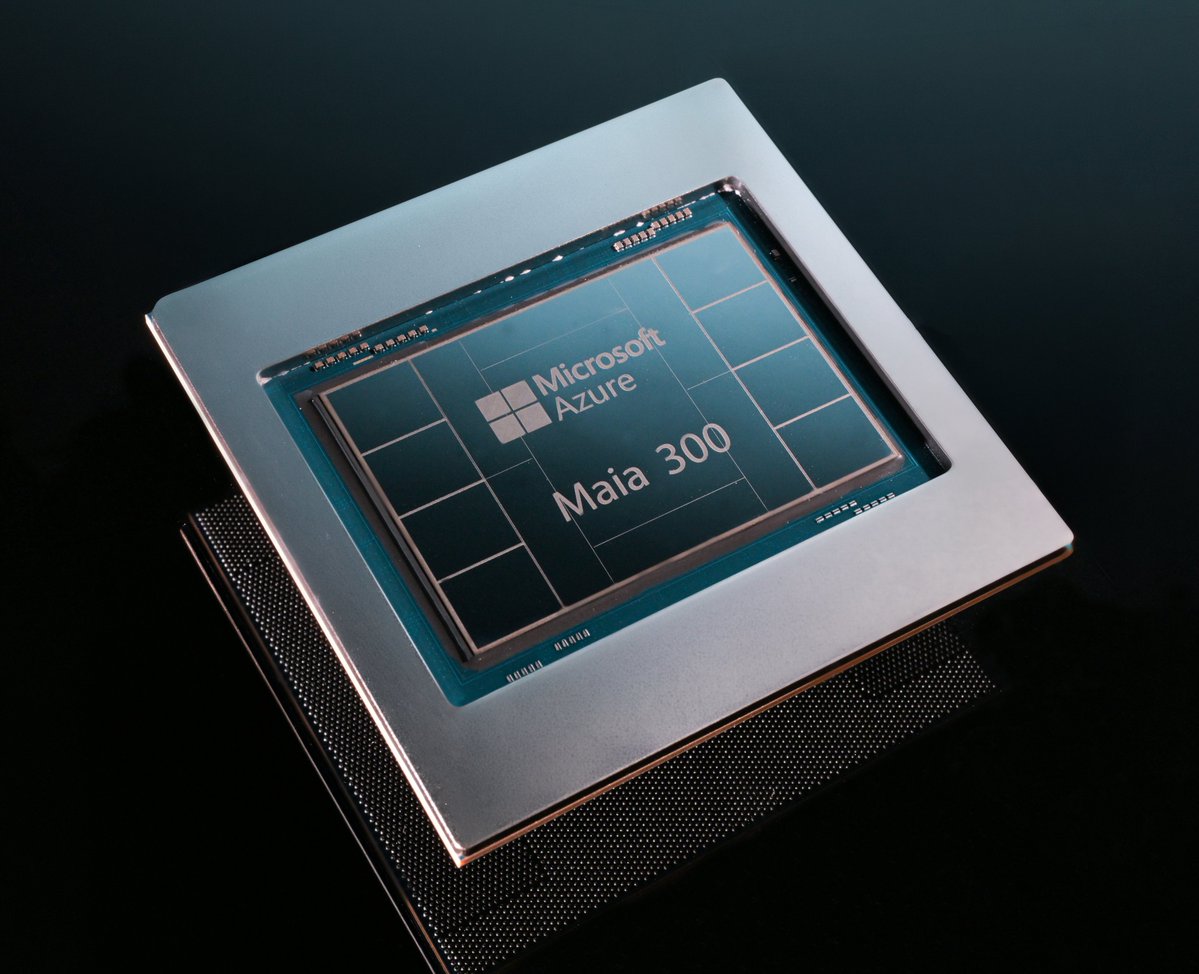
Today we are announcing our biggest bet yet on our own silicon. Starting next calendar year, we will scale our Maia family to multi-gigawatt deployments, making it the primary inference system for our own product and services. And we’re introducing Maia 300, which delivers 40% more tokens per watt compared to leading GPU-based systems. We are already deploying Maia 200 across the US, Europe, and Australia, delivering up to 1.7x more tokens per watt across experiences in Teams and Copilot. Our goal is to build on the full-stack efficiency gains we’ve already seen, while continuing to bring the latest innovations from across the ecosystem into our fleet.
Context
Microsoft plans to run most of its own AI products on in house silicon instead of mainly Nvidia and AMD GPUs, one of the biggest commitments yet by a cloud giant to its own chips.
Maia is Microsoft's family of custom AI accelerators, and Maia 300 is its third generation. The Verge reported that Maia 200 was announced only in January and already runs production workloads including Microsoft Copilot, GitHub Copilot and Microsoft Foundry. Microsoft compares Maia 300 against leading GPU based systems without naming a specific product. Microsoft also announced the chip first hand in its own post on X, saying Maia 300 delivers 40% more inference tokens per megawatt than leading GPU based systems and up to 7 times the rack scale token throughput of Maia 200.
Deep dive
On October 12, Satya Nadella called the announcement Microsoft's biggest bet yet on its own silicon. He said that starting next calendar year Microsoft will scale its Maia family to multi gigawatt deployments, making it the primary inference system for its own products and services, and introduced Maia 300, which he said delivers 40% more tokens per watt than leading GPU based systems.
In the official Microsoft Blog post, cloud chief Scott Guthrie framed the figure as 40 percent more tokens per megawatt, and said a full 96 accelerator Maia 300 configuration delivers up to 7 times the rack scale token throughput of Maia 200. According to the post, each rack holds 96 accelerators within a 167 kilowatt power envelope, with 27.6 TB of HBM and 1.7 PB/s of aggregate memory bandwidth. Maia 300 will begin production deployments in 2027.
Microsoft's Azure architecture blog said Maia 300 offers more than 2.5 times the performance per watt of Maia 200 and twice the accelerators per rack, and is designed for long context reasoning, latency sensitive conversation and multi step agentic tasks.
Nadella added that Maia 200 is already deployed across the US, Europe and Australia, delivering up to 1.7 times more tokens per watt in Teams and Copilot. The Verge said the gains should let Microsoft rely mainly on its own chips instead of ones from Nvidia and AMD.
What to expect next
Watch for independent measurements of Maia 300 once it reaches production in 2027, since all efficiency figures so far are Microsoft's own projections, and for how much of Microsoft's GPU spending shifts as a result.
Also watch for more details at Microsoft Ignite next month, whether Maia becomes available to outside Azure customers at scale, and how Nvidia and AMD respond as another major buyer moves inference onto in house silicon.