The top 5 stories by email, daily.Subscribe
Mon, Oct 121 / 38
01Policy

Anthropic's updated usage policy bans sustained and needless cruelty toward its Claude models, with Claude ending abusive chats as the main enforcement (opens the post on X)

Anthropic Bans "Sustained And Needless" Cruelty Toward Claude In New Usage Policy

45 replies13 reposts124 likes
02Research

Anthropic's Frontier Red Team says small AI models may be months away from being able to self replicate on cheap IoT devices without a datacenter (opens the post on X)

Anthropic's Frontier Red Team believes small AI models may now be months away from being capable of self replicating without access to a datacenter. Quoting from the blog: 'The capabilities that make AI models generally powerful coding agents also generalize to cyber tasks, including autonomous replication. Like coding agents in 2024, we’re seeing signs of life for AI worms. We don’t yet have a full rogue replicator, but agents are becoming increasingly capable of completing the individual steps in the replication chain (and passing on their adaptations to future copies of themselves). At the same time, increasing amounts of inference compute are now available both inside and outside of datacenters (see Appendix D). It’s uncertain exactly what form autonomous AI replication will take. It could be a slow, distributed “digital slime mold,” living on relatively insecure compute. It could also be a powerful cyber model that breaches datacenters at a high pace, or a model that scams people for compute credits. As a prediction that goes beyond our experiments, we expect a future awash with agents running on all types of hardware, including some that aren’t under human control. While it’s true that IoT devices have been vulnerable for a long time, lightweight agents may be much more willing than human attackers to put in the effort to compromise large fractions of the world’s IoT compute. The rise of slow replicators would also be a bellwether for more aggressive, faster ones that can breach more hardened machines or be effective API key thieves. We should aim to harden our systems to make it difficult for such replicators to spread, but also prepare to deal with a world where they are here to stay.'

Screenshot of the Anthropic blog post titled AI models may be capable of self replicating without access to a datacenter, dated Oct 12, 2026, by William Zhou and Daniel Freeman
239 replies330 reposts1765 likes
03Product

Intel names its Crescent Island inference GPU the GPU D Series, with up to 480GB of memory and 1.3 petaflops of FP8 in a 350W air cooled card (opens the post on X)

Intel GPU D-series, code-named Crescent Island - 480 GB LPDDR5X memory - 1.5 TB/s of memory bandwidth - 1.3 petaflops of FP8 - 350 W TDP

Product render of a dark gray Intel PCIe accelerator card labeled D270
84 replies125 reposts1602 likes
04Product

SpaceXSI unifies Grok, Cursor and X Premium into one plan called The X Subscription (opens the post on X)

JUST IN: SpaceXSI officially published the legal terms for a unified X Premium + Grok + Cursor subscription plan >social network + frontier intelligence + dev IDE + banking X the everything app. It's happening

Screenshot of a web page titled Bundled Subscription Terms of Service, with highlighted text naming the X Subscription Consumer Terms of Service, a Grok Addendum and a Cursor Addendum
156 replies233 reposts2209 likes
05Research

US business investment in information processing equipment and software has hit a record 5.05% of GDP, above the dot com peak (opens the post on X)

BREAKING: US private fixed investment in information processing equipment and software is now up to a record 5.05% of US GDP. This figure has increased +1.08 percentage points since Q3 2023. Over this period, these investments have surged +$531 billion, to a record annual rate of $1.65 trillion. By comparison, this percentage peaked at 4.46% in Q4 2000, before the 2001 recession. Investment in information processing equipment and software has more than doubled since Q1 2018. The scale of America's AI spending boom is unprecedented.

Line chart from The Kobeissi Letter of US private investment in information processing equipment and software as a percent of GDP from 1990 to 2026, peaking at 4.46% around 2000 and rising to 5.05% in 2026
67 replies55 reposts584 likes
06Product

Epic Games tells developers on its delayed Marvel and Star Wars shooter there will be no more hand written code and that art will be made with full AI workflows, according to Bloomberg (opens the post on X)

Epic Games has reportedly told devs to use more AI tools on its delayed Star Wars & Marvel shooter title One director told staff "No more hand-written code" and said all game art should be "generated with full AI workflows"

Epic Games logo, white EPIC GAMES lettering on a black shield shape
369 replies240 reposts4260 likes
07Opinion

Broadcom CEO Hock Tan says many AI investors have no clue what they are investing in and are acting like they are in a casino, according to Bloomberg (opens the post on X)

Broadcom, $AVGO, CEO Hock Tan says some AI investors are betting like they’re in a casino. “A lot of investors have no clue what they are investing in,” Tan said.

103 replies57 reposts729 likes
08Product

Nvidia announces RTX Spark launch events in Beijing, Berlin, Istanbul, Seoul, San Francisco and Taipei to mark its new Windows laptops (opens the post on X)

A new beginning for @Windows PCs deserves a global celebration. Join us at one of our @NVIDIARTXSpark launch events. Try out demos on the new laptops, pick up some swag, and enter for a chance to win an @ASUS ProArt P14 RTX Spark laptop signed by Jensen. Plus, more exclusive experiences to discover at each stop. Here's where we'll be: • Beijing • Berlin • Istanbul • Seoul • San Francisco • Taipei 📍Event details and how to join us coming soon.

Video preview frame of a man in a dark jacket gesturing toward a table of black ASUS ProArt laptop boxes with signatures on them
272 replies420 reposts3721 likes
09Policy

Iran's IRGC linked Tasnim says Tehran could make Google, Meta, Microsoft and Amazon get permits, accept inspections and pay fees for undersea cables in its Hormuz waters (opens the post on X)

BREAKING: Iran is moving to force Google, Meta, Microsoft and Amazon to obtain passage permits, undergo technical inspections and pay sovereignty fees for the undersea internet cables running through its territorial waters in the Strait of Hormuz, per Tasnim. At least two major cable systems, FALCON and Gulf Bridge International, run directly through Iranian territorial waters in the Strait. Iran says their physical placement on Iran's seabed creates a legal basis to apply its own regulations, requiring the owning companies to meet environmental and seabed monitoring standards and to pay for Iranian supervisory services. More than 99% of international data traffic travels through undersea cables. The move comes as Iran said yesterday that if the war restarts, the region's undersea cables, data centers and AI facilities "will be destroyed," putting their total value at more than $2 trillion.

253 replies1387 reposts7003 likes
10Product

ReadMe founder Gregory Koberger launches Restless, a toolkit that makes APIs improve themselves from every call, support question and error (opens the post on X)

Your API is now your product, and it needs to move as fast as you do. Introducing Restless. Every call, support question, pull request, and error message leaves your API better for the next agent.

Video preview frame of a man in a dark shirt speaking on a grainy webcam style recording in front of a pale wall
129 replies892 reposts683 likes
11Opinion

Watcher.Guru says Mark Zuckerberg claims Meta has caught up with OpenAI and Anthropic and rejects calls to slow AI, citing an FT interview (opens the post on X)

JUST IN: Mark Zuckerberg says $META has caught up with OpenAI and Anthropic in the AI race and rejects calls to slow down development.

255 replies259 reposts4854 likes
12Model release

OpenBMB releases MiniCPM V 4.7, open multimodal models built to run on phones and tablets, including a 35B mixture of experts model (opens the post on X)

🚀 Introducing MiniCPM-V 4.7, our new open-source MLLM series! Advancing the Performance–Efficiency Pareto Frontier. It brings strong multimodal capabilities to iOS and Android devices with extreme efficiency. Two new models: 🔹 MiniCPM-V 4.7 35B-A3B — Bring SOTA performance to local devices with newly introduced LES (Lookahead Expert Scheduling) technique, a new milestone of on-device multimodal AI. 🔹 MiniCPM-V 4.7 1B — Lightweight, efficient multimodal AI. Easier to deploy. ⚡ What's new? SOTA performance: Competitive results across 34 benchmarks spanning multimodal understanding, STEM reasoning, OCR and long-video comprehension. Fast on-device inference: LES predicts and preloads expert weights to reduce inference stalls, boosting 5× speedup on iPad Pro M4 (16GB) with byte-for-byte identical outputs. It enables MiniCPM-V 4.7 35B-A3B to achieve 17+ tokens/s on iPad Pro M4 (16GB) and 13+ tokens/s on iPhone 17 Pro Max, while costing only 3GB memory 🤯 Efficient visual processing: 4× and 16× hybrid visual token compression. Even at 16× compression, 35B-A3B scores 90.4 on OCRBench, 5.2 points ahead of Qwen3.6 35B-A3B. Easier customization: We introduce Self-Replay Fine-Tuning, a simple way to customize new target capabilities at low cost while maintaining general performance. Broad hardware support: Day-0 adaptations for Apple, Intel, AMD, Arm and Rockchip, with many more platforms supported through FlagOS! Download, deploy, and build something we haven't imagined yet. 👀👇 🔗 GitHub: t.co/msjm2QlrvX 🤗 Hugging Face:

OpenBMB promotional poster for MiniCPM V 4.7 showing a glossy high speed train, with the text A New Frontier for On Device Multimodal AI and Day One Support Across Multiple Chip Platforms
130 replies233 reposts4549 likes
13Model release

Mark Zuckerberg introduces Muse Wonder, Meta's new family of frontier models for personal and professional agentic work (opens the post on X)

Introducing Muse Wonder, our new family of frontier models with state of the art performance for personal and professional agentic work.

Benchmark table comparing Muse Wonder Full and Muse Wonder with Claude Fable 5.1, GPT 6 Astra and Claude Opus 5.5 across personal and professional agent, coding and general tests, including Personal Superintelligence Index scores of 59.1 for Muse Wonder Full and 54.3 for Muse Wonder
2148 replies2954 reposts37238 likes
14Product

Nvidia has reportedly stopped supplying chips for new RTX 5090 cards so it can sell them in pricier AI and workstation GPUs, according to hardware leakers (opens the post on X)

Nvidia has reportedly stopped RTX 5090 GPU production to prioritize more profitable AI chips used by data centers

Nvidia logo, a white eye symbol and the word NVIDIA on a green background
243 replies310 reposts10045 likes
15Model release

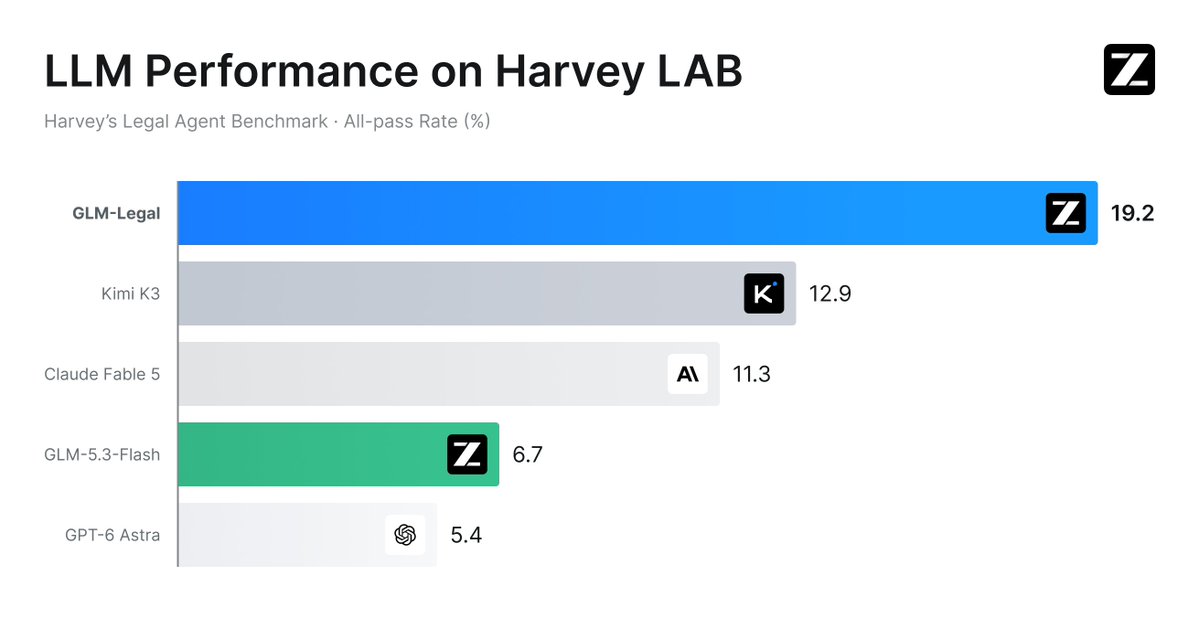
Zhipu's Z.ai releases GLM Legal, a legal model built on GLM 5.3 Flash that it says matches frontier models on legal benchmarks (opens the post on X)

Introducing GLM-Legal Built on GLM-5.3-Flash, GLM-Legal matches frontier models on mainstream legal benchmarks. Designed for real legal workflows: contract review, evidence analysis, compliance, and more. Tech Blog: t.co/xOzFqKNyqD Apply for API Access: t.co/dKuoDRIKKz Try AutoClaw:

Bar chart titled LLM Performance on Harvey LAB showing all pass rates: GLM Legal 19.2, Kimi K3 12.9, Claude Fable 5 11.3, GLM 5.3 Flash 6.7, GPT 6 Astra 5.4
251 replies468 reposts5960 likes
16Model release

Subquadratic launches SubQ Snap, a long context decision model it says keeps compute per token constant as context grows (opens the post on X)

Introducing SubQ Snap, the first long-context decision model for real enterprise work. Snap is the only decision model or LLM where compute per token stays constant as context grows. • 384K tokens of multimodal context, 12x larger than Jev. • 61.7 on Decision Index v0.2.1 vs Jev’s 57.9, outperforming on 13 of 16 enterprise benchmarks. •Processes 100K tokens and returns a decision in under one second. •$0.05/MM input tokens. Output is free. Available today to anyone. The first 10,000 sign-ups get 100M free input tokens. We’ll likely hit capacity fast and will add users as we add compute. Compute offers welcome 🙂. Latency will be variable as we tune the platform to this new model and category of users. Model speeds are 80ms for minimal context, 250ms for 32k, 660ms for 100k, and 2.5 seconds for 384k. Visit:

Video preview frame showing a man's face in the center of a grid of colored squares in orange, blue, green, yellow, black, white and gray
558 replies654 reposts2905 likes
17Funding

Getty Images plans to go private through a prepackaged Chapter 11, with the Getty family and Koch putting in up to $533 million (opens the post on X)

*GETTY IMAGES TO GO PRIVATE VIA PREPACKAGED CHAPTER 11 AI strikes again

48 replies98 reposts1418 likes
18Opinion

Aravind Srinivas says a one person company spends about $1M a year on Perplexity while making $3M a year automating newsletters (opens the post on X)

FYI: Aravind Srinivas (@AravSrinivas) says there’s a 1-person company spending **~$1M/year** on Perplexity “There’s 1 solopreneur, literally a one-person company, spending upwards of a million dollars a year on our product.” “He’s making $3 million a year by automating newsletters for others.”

Video preview frame of a man with glasses in a dark sweater gesturing while seated in front of a gray wall, with a Sourcery logo in the corner
38 replies75 reposts923 likes
19Product

NVIDIA and Cisco announce USFP, a pluggable optical module designed for 400Gb/s per lane to scale AI data center networks (opens the post on X)

NVIDIA and @Cisco introduce pluggable optics to scale AI factories. USFP is the first module to support 400Gb/s per lane, delivering 4x the bandwidth density of today's optics. AI builders can connect more compute to the same switch — no extra network tiers, less power per bit moved. Learn more:

Rendered image of a silver optical transceiver module with a copper colored heat plate and a grid of gold contacts on the connector end, on a black background
62 replies195 reposts1713 likes
20Product

Nvidia contributes its Vera Rubin NVL72 rack and compute tray designs to the Open Compute Project at OCP Summit 2026 (opens the post on X)

Open standards are the foundation for AI factories that can scale from megawatts to gigawatts. At #OCPSummit26, we contributed the NVIDIA Vera Rubin NVL72 rack and compute tray designs to @OpenComputePrj through the open 3rd generation NVIDIA MGX architecture. We also announced advances across open source software, AI networking, pluggable optics, facility design standards and more, giving the industry a common foundation for next-generation AI factories. Learn more:

Rendering of a large AI data center floor with rows of black server racks connected by overhead silver liquid cooling pipes
91 replies191 reposts1347 likes
21Product

Downdetector shows a spike in user reports of problems with OpenAI, as a multi day ChatGPT and Codex disruption winds down (opens the post on X)

USER REPORTS SHOW PROBLEMS WITH OPENAI: DOWNDETECTOR

35 replies24 reposts195 likes
22Policy

Man who used bots to stream hundreds of thousands of AI songs billions of times is sentenced to 18 months in the first US streaming fraud case (opens the post on X)

JUST IN: Man sentenced to 18 months in prison after generating hundreds of thousands of AI songs & using bots to stream them billions of times, outstreaming Taylor Swift & earning $8 million.

706 replies917 reposts14313 likes
23Opinion

Perplexity CEO Aravind Srinivas argues tiny AI native companies could power an American economic boom, citing a solo founder spending over $1M a year on Perplexity Computer (opens the post on X)

NEW: I sat down w/ Perplexity Founder & CEO Aravind Srinivas (@AravSrinivas) on why AI-native SMBs could drive the next American millionaire economic boom. @perplexity_ai, valued at ~$20B with ~$2B in reported funding, $750M in annualized revenue as of August, seeing 5x YoY revenue growth as it expands from search into autonomous agents. One example Aravind shared is a single-person company generating $3M in annual revenue while spending over $1M a year on Perplexity Computer. His thesis is that AI could fundamentally change the economics of building a business. Smaller teams, less capital, higher productivity, & entirely new business models. At the infrastructure layer, Aravind sees a shift toward local & hybrid inference, with AI agents operating across personal devices and the cloud. As context windows expand and workloads become more personalized, local compute becomes increasingly cost-competitive, while offering greater privacy, control & data sovereignty. We cover: › Why SMBs could become a major driver of US GDP growth › The shift from AI models to agents & recursive economics › Why Perplexity is betting on your Mac instead of building data centers › NVIDIA, Apple Silicon, local inference & sovereign AI › Why writing code is no longer the bottleneck, but problem-solving is 𝐓𝐈𝐌𝐄𝐒𝐓𝐀𝐌𝐏𝐒 (00:00) Aravind Srinivas, Co-founder & CEO of Perplexity (01:30) Why Perplexity's brand is built on curiosity (04:47) Every great invention starts with one question (08:18) How to build a $1T company in America alone (12:36) The next big companies will be tiny (13:45) Is the American dream still alive? (16:28) Stop blaming users for bad prompts (22:55) How Perplexity quietly grew 5x (26:51) The solopreneur spending $1M a year on Perplexity (28:28) "We don't have competitors, we have contributors" (29:20) The data center is coming to your laptop (34:32) Orchestrating up with NVIDIA, down with Apple (36:11) What happens when your AI agent knows everything (39:17) Why Perplexity is skipping the data center race (41:25) Stop asking AI to write code, ask it to think (45:47) Perplexity’s answer to AI security (48:27) The Hugging Face incident & multi-agent threats (50:45) Turning everyone into a scientist (53:31) Why Perplexity isn’t chasing a billion users

Video preview frame of a man with glasses and a beard in a dark hoodie, in front of a Bloomberg Tech backdrop
17 replies31 reposts201 likes
24Research

Global smartphone shipments fell 20% in the third quarter to their lowest level for the period since 2012, as AI data centers soak up memory chips, according to Counterpoint (opens the post on X)

GLOBAL SMARTPHONE SHIPMENTS PLUNGE 20% AS AI BOOM SQUEEZES CHIP SUPPLY Global smartphone shipments fell 20% in Q3, hitting their lowest third-quarter level since 2012, according to Counterpoint Research. AI data centers are absorbing memory chip supplies, driving up smartphone production costs and retail prices. Samsung leads with 23% market share, followed closely by Apple at 22%. Meanwhile, Xiaomi shipments plunged over 30%, as manufacturers prioritize margins over sales volumes.

54 replies63 reposts373 likes
25Research

Staff at AI labs and the UK's AI Security Institute report a mental toll from fears their work could harm society, the FT reported (opens the post on X)

AI staff are complaining of mental toll over fears of threats to society, per FT

106 replies92 reposts1023 likes
26Opinion

DHH says Dario Amodei turned out to be right, maybe even a little cautious, about AI doing most of software engineering within a year (opens the post on X)

Dario turned out to be right. Maybe even a little cautious. But look at the comments. All so very convinced that they knew more and better, and what an idiot he was.

345 replies275 reposts5199 likes
27Research

Alibaba's Qwen team unveils QwenGyre, a training system for AI agents on tasks that run for hours, claiming up to 1.85 times faster reinforcement learning (opens the post on X)

Introducing QwenGyre, bringing elastic RL to extreme-long-horizon (XLong) agent training. ✨ It launches with two core designs: 🥳 - Elastic Scheduler: reallocates GPUs between rollout & training as demand shifts—live executions never interrupted. Up to 1.85× speedup over Colocate, 1.78× over Async. - Trajectory Processor: turns branching executions (compaction, sub-agents, retries) into prefix-shared trajectory trees with bounded, deduplicated training samples. Partial progress after timeout still gets scored. Scaled to Qwen3.8-2.4T-A95B with ~700K tokens per rollout, QwenGyre lifts NL2RepoBench from 52.5% to 58.5% in 48 steps, cutting end-to-end training time by ~44% vs Async. 🔗 Read the paper:

Qwen graphic titled QwenGyre, Extreme long horizon reinforcement learning tasks, with labels for elastic GPU scheduling, trajectory processing and a 1.78x arrow
138 replies289 reposts3072 likes
28Product

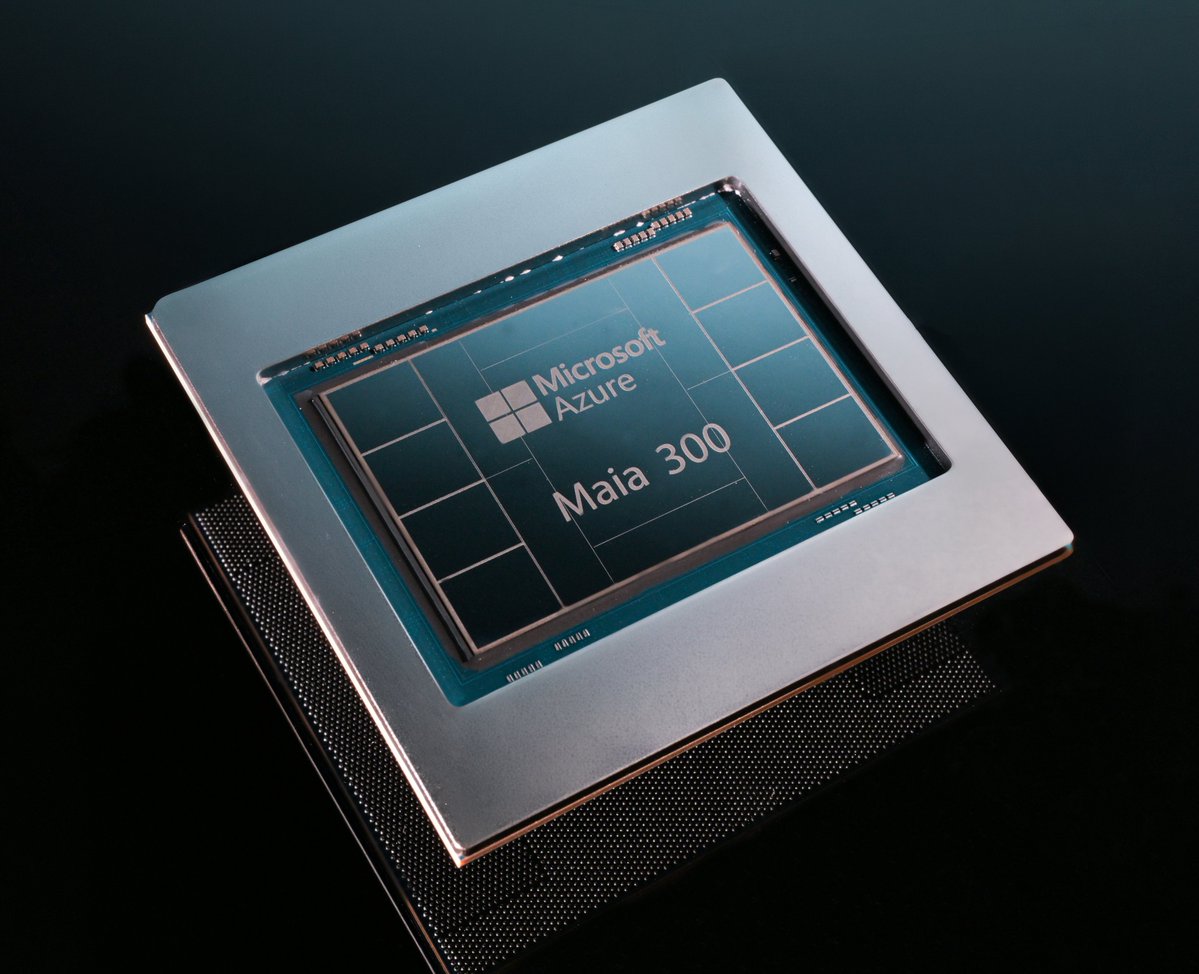
Satya Nadella says Microsoft will scale its Maia chips to multi gigawatt deployments as its main inference system from 2027, and introduces Maia 300 (opens the post on X)

Today we are announcing our biggest bet yet on our own silicon. Starting next calendar year, we will scale our Maia family to multi-gigawatt deployments, making it the primary inference system for our own product and services. And we’re introducing Maia 300, which delivers 40% more tokens per watt compared to leading GPU-based systems. We are already deploying Maia 200 across the US, Europe, and Australia, delivering up to 1.7x more tokens per watt across experiences in Teams and Copilot. Our goal is to build on the full-stack efficiency gains we’ve already seen, while continuing to bring the latest innovations from across the ecosystem into our fleet.

Close up of a Microsoft Azure Maia 300 chip package with a silver frame and the Microsoft Azure logo on a dark background
737 replies1574 reposts14978 likes
29Research

AI consultants and strategists are the second fastest growing job in the US, per LinkedIn's 2026 Jobs on the Rise list resurfaced by unusual_whales (opens the post on X)

AI consultant and strategist is the second-fastest growing role in the US, per LinkedIn

128 replies233 reposts3945 likes
30Policy

Nikon strips the winner of its Small World in Motion microscopy video contest after ruling his use of generative AI broke the rules (opens the post on X)

The winner of a prestigious scientific photography competition has been disqualified after organizers concluded that his use of generative AI broke the rules.

CNN graphic of a microscope image with green hair like cilia above red and blue cells, with the headline Nikon revokes first prize in Small World in Motion video competition over AI use
41 replies72 reposts276 likes
31Policy

A Microsoft applied science director called AI training the largest theft of labor in human history, unsealed court filings show (opens the post on X)

Microsoft’s director of applied science has called the training of AI models the “largest theft of labor in human history,” per WaPo

214 replies1062 reposts9064 likes
32Opinion

Linus Torvalds says he used AI tools to untangle obscure Linux kernel code, which confirmed one reported bug and found three more dating to 2013 (opens the post on X)

Linus Torvalds "Did What I Preach", Used AI To Make Code Decipherable & Uncovered More Bugs Follow on from yesterday.... More AI use on the Linux kernel by Linus Torvalds this weekend.

9 replies50 reposts774 likes
33Policy

Microsoft president Brad Smith says AI is less regulated than milk and calls for kill switches, incident reporting and government sign off on frontier models (opens the post on X)

AI is less regulated than milk, says Microsoft president

71 replies205 reposts653 likes
34Research

A Korean analyst forecasts SK hynix third quarter operating profit of KRW 80.1 trillion, well above consensus (opens the post on X)

The Korean analyst with the best track record of forecasting SK hynix’s earnings released a report today predicting a substantial beat versus consensus. The analyst forecasts operating profit of KRW 80.1 trillion, above the current consensus of KRW 74 trillion—with recent reports revising estimates down to as low as KRW 70 trillion.

60 replies70 reposts1174 likes
35Policy

Watcher.Guru claims the IMF predicts AI will take over 40% of all jobs, but the IMF's finding is that about 40% of jobs are exposed to AI (opens the post on X)

JUST IN: IMF predicts AI will take over 40% of all jobs.

541 replies991 reposts8481 likes
36Policy

US reverses course and lets AI developers give Britain early access to models for safety testing, the Telegraph reports (opens the post on X)

US reverses course on Britain's testing of AI models, Telegraph says

18 replies12 reposts25 likes
37Product

Mario Nawfal's viral post spotlights Honor's Robot Phone, whose 200MP camera on a robotic gimbal arm tracks and reacts to users (opens the post on X)

🇨🇳 China made a smartphone that can literally MOVE ITS CAMERA LIKE A ROBOT. Honor's new Robot Phone has a 200 MP camera mounted on a robotic arm that pops out of the back, tracks people, turns its head, NODS, and even reacts to you through AI. The damn thing looks like it's ALIVE 🔥 Writer: Sol

Video preview frame of a hand holding a silver Honor Robot Phone from the back, showing its large camera module with the gimbal camera folded behind a cover
91 replies378 reposts1748 likes
38Opinion

Nikita Bier says technical moats are mostly over, leaving proprietary data, network effects and a physical component as the only durable ones (opens the post on X)

Technical moats are mostly over at this point. If you’re building something that is meant to be durable, the only moats now are: • Proprietary data • Network effects • A physical component

1104 replies1927 reposts24381 likes

You're caught up.

That was everything from Monday, October 12. The next deck lands tomorrow.

Scanned , 106 sources