François Chollet says AI's shift from answer completion to on the fly reasoning is the big story of 2025 and 2026

How AI shifted from a transductive paradigm (token-by-token answer completion) to an inductive paradigm (on-the-fly reasoning chain synthesis), in one chart. This is the big story of 2025 and 2026. This is what made coding agents work.
Context
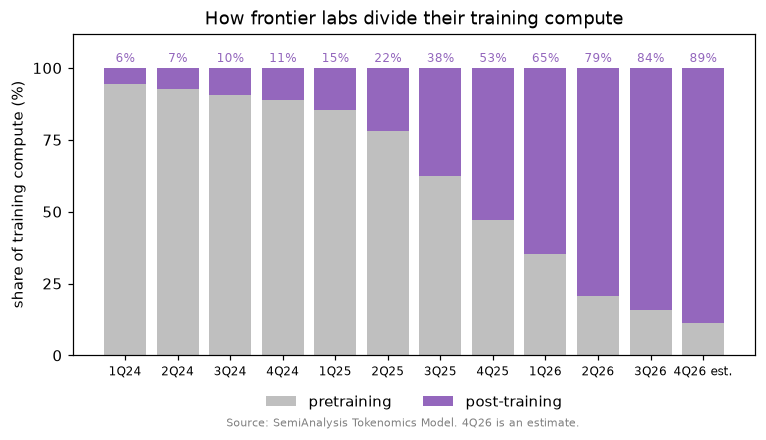
Chollet, creator of Keras and the ARC benchmark, credits the move to reasoning chains for making coding agents work, and his chart shows frontier labs now spending most of their training compute after pretraining.
Transductive models produce an answer directly, token by token, from what they learned in training. Chollet uses inductive to describe models that synthesize a reasoning chain on the fly for each problem, the approach behind today's reasoning models and coding agents. The chart he shared credits the SemiAnalysis Tokenomics Model for its data.
Deep dive
On October 10, François Chollet posted a chart he said shows how AI shifted from a transductive paradigm, meaning token by token answer completion, to an inductive paradigm, meaning on the fly reasoning chain synthesis. He called it the big story of 2025 and 2026 and said it is what made coding agents work.
The chart, titled How frontier labs divide their training compute, splits training compute between pretraining and post training by quarter. According to the chart, post training was 6 percent of the total in the first quarter of 2024, 15 percent in the first quarter of 2025, 53 percent by the fourth quarter of 2025 and 84 percent in the third quarter of 2026, with an estimate of 89 percent for the fourth quarter of 2026. The chart credits the SemiAnalysis Tokenomics Model as its source and marks the last quarter as an estimate.
Post training covers techniques such as reinforcement learning that teach models to reason through problems step by step, rather than only predicting text learned during pretraining. Chollet has long argued that general intelligence requires adapting to new problems at test time, the idea behind his ARC benchmark.
What to expect next
Watch whether labs confirm this compute split in their own disclosures, since the chart relies on a SemiAnalysis model rather than published lab figures.
Also watch whether the shift toward post training keeps raising scores on reasoning benchmarks such as ARC, and whether pretraining scale makes a comeback in the next generation of frontier models. A further question is whether Chollet's framing shapes how labs describe their own progress in upcoming model releases.