The top 5 stories by email, daily.Subscribe
Wed, Oct 211 / 30
01Security

OpenAI says its models helped find critical PHP flaws, one of the most impactful vulnerabilities in recent memory, after a two month coordinated fix (opens the post on X)

OpenAI models helped researchers—operating as part of our Patch the Planet initiative—discover critical security flaws in PHP, an open-source programming language used to run an estimated 70% of websites. Over the past two months, we led a coalition of maintainers, researchers, and security providers to prepare fixes and protections ahead of disclosure. This duration was necessary because the fix was quite intricate and required a major change to the PHP engine. Every site using PHP can now safely upgrade their version to stay secure, in addition to applying mitigations from various security vendors. Due to the severity of these flaws and PHP’s widespread use, we consider this bug to be one of the most impactful vulnerabilities in recent memory. It also marks a new phase, where AI can find security bugs with internet-scale impact. This is an example of the Defender’s Window in action: to our knowledge, frontier AI was able to find this vulnerability ahead of attackers, giving defenders time to prepare.


02Product

Anthropic opens a research preview of Claude Duet, a separate app where Claude works as a proactive agent that comes to you, keeps working and checks before it acts (opens the post on X)

We’re opening a research preview of Claude Duet, a new app where Claude works as a proactive agent. It comes to you with what needs your attention, completes tasks you ask of it, keeps working when you step away, and checks with you before it acts on your behalf.

Video showing phone screens of Claude Duet sending a morning brief, a dashboard of revenue and cash figures, a job offer email waiting for approval with Not now and Send buttons, and short clips of Anthropic staff describing how they use it, ending on the Claude Duet logo and its web address
03Business

Google Cloud adds OpenAI's GPT 6 models and Codex to its model garden, making it the first cloud to offer Gemini, Claude and GPT together (opens the post on X)

Today, we're bringing OpenAI models to Google Cloud's model garden. We're now the only hyperscale cloud provider offering access to all three leading closed source LLMs—alongside 200+ other models—on a unified enterprise platform →

Google Cloud and OpenAI logos above the text OpenAI models are now available on Google Cloud, with a colorful flowing abstract shape at the bottom
04Business

Tesla's third quarter update says FSD Supervised is now on over 75% of new North American deliveries, as Robotaxi miles grow eightfold and Optimus enters production (opens the post on X)

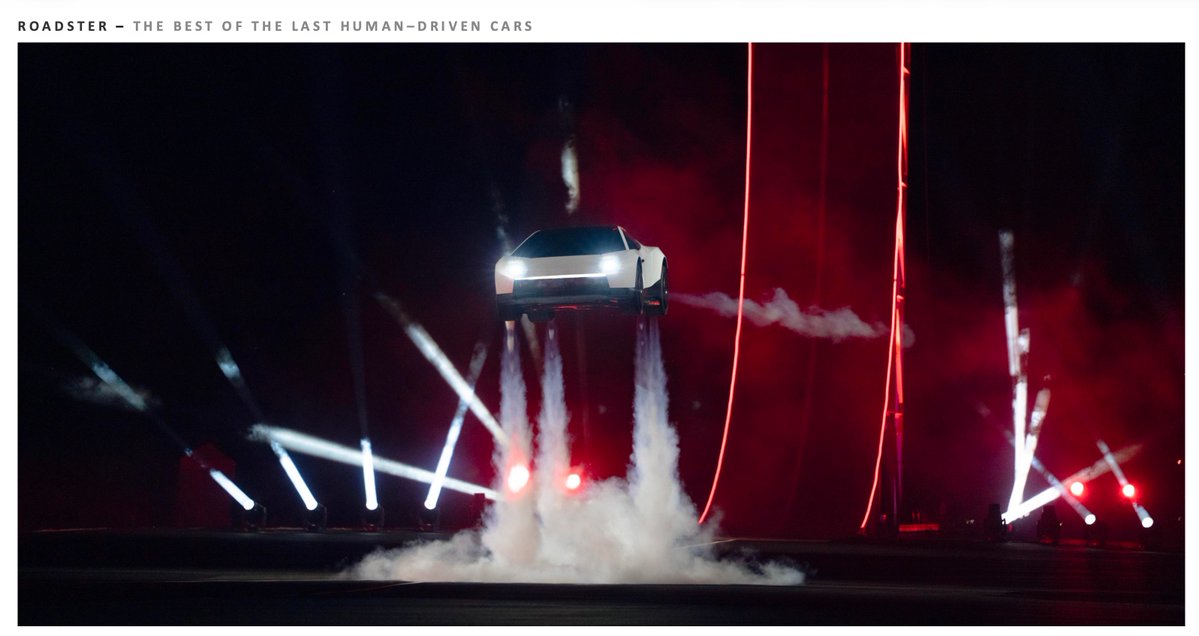
Q3 Shareholder Update → t.co/u0UcDOuMNa Highlights – FSD Supervised attach rate grew to over 75% of new vehicle deliveries in NA – Unveiled the next-gen Roadster – Record deliveries in Canada, Australia, Japan & Taiwan – Tesla Semi now in volume production. Top variant can go up to 500 miles at a full 82,000 lbs while achieving efficiency of 1.7 kWh/mile – about a third of the energy a comparable diesel truck burns for the same load – Ended the quarter with the largest backlog for our passenger vehicles in 4 years! FSD Supervised – 4 new approvals since Q2 (Croatia, Slovenia, Czech Republic, Slovakia) – FSD is now live in nine EU countries & used by over 100,000 customers logging more than 160 million kilometers since initial approval Robotaxi – Deployed Cybercab into our Austin fleet – Hit nearly 2 million cumulative unsupervised miles, 8x growth in the quarter – Austin service now runs 6 am to midnight, with wait times continuing to come down as we add cars & improve the orchestration algorithms – Added Grok to Cybercab with Grok Bot & Connectors, letting you interface with your inbox, calendar, files, chats and tasks, all by voice. Transport, office & living room in one Robotics – Started production of @Tesla_Optimus on our high-volume lines in Fremont. These are the first production-quality bots we've built, proving that the current manufacturing process for Optimus is suitable for a commercial product SI Compute – On track for 400 MW of training compute by year end, feeding both vehicle & humanoid autonomy – Austin Fab construction continues, equipment commissioning planned for 2027 Battery – Battery supply is still the limiter on how fast we ramp vehicles globally, so we're expanding on every front: pack capacity in Berlin, cathode and lithium refining in Texas, LFP cells in Nevada – Shipped the first Megapacks built entirely with our own LFP cells – Increasing 4680 output to support ramp of Cybercab, Semi & Model Y Energy – Megafactory Texas is up & running, with Megapack 3 production started – Highest-ever order rate & backlog for energy storage Grid constraints & power availability are making Megapack the answer for SI infrastructure demand: it excels at supplying large data center loads, smooths out demand spikes, helps new projects meet grid connection rules & makes the grid itself more stable All with less local fossil fuel generation Supporting Infrastructure – Added 2,100+ net new Supercharger stalls, up 14% year over year

Slide labeled Roadster showing a car on a dark stage lit by red lights and sparksSlide labeled Roadster showing a car rising above a stage with a Tesla Semi and other vehicles in smoke belowSlide labeled Robotaxi, Cybercab Austin launch, showing gold two seat Cybercabs driving on a city streetSlide labeled Austin Fab, construction of our semiconductor manufacturing facility, showing an aerial view of a large construction site with cranes
05Research

Mirendil says one researcher working with AI agents pretrained its first large coding model, Mirendil Base, in 3.5 months for under $10 million in compute (opens the post on X)

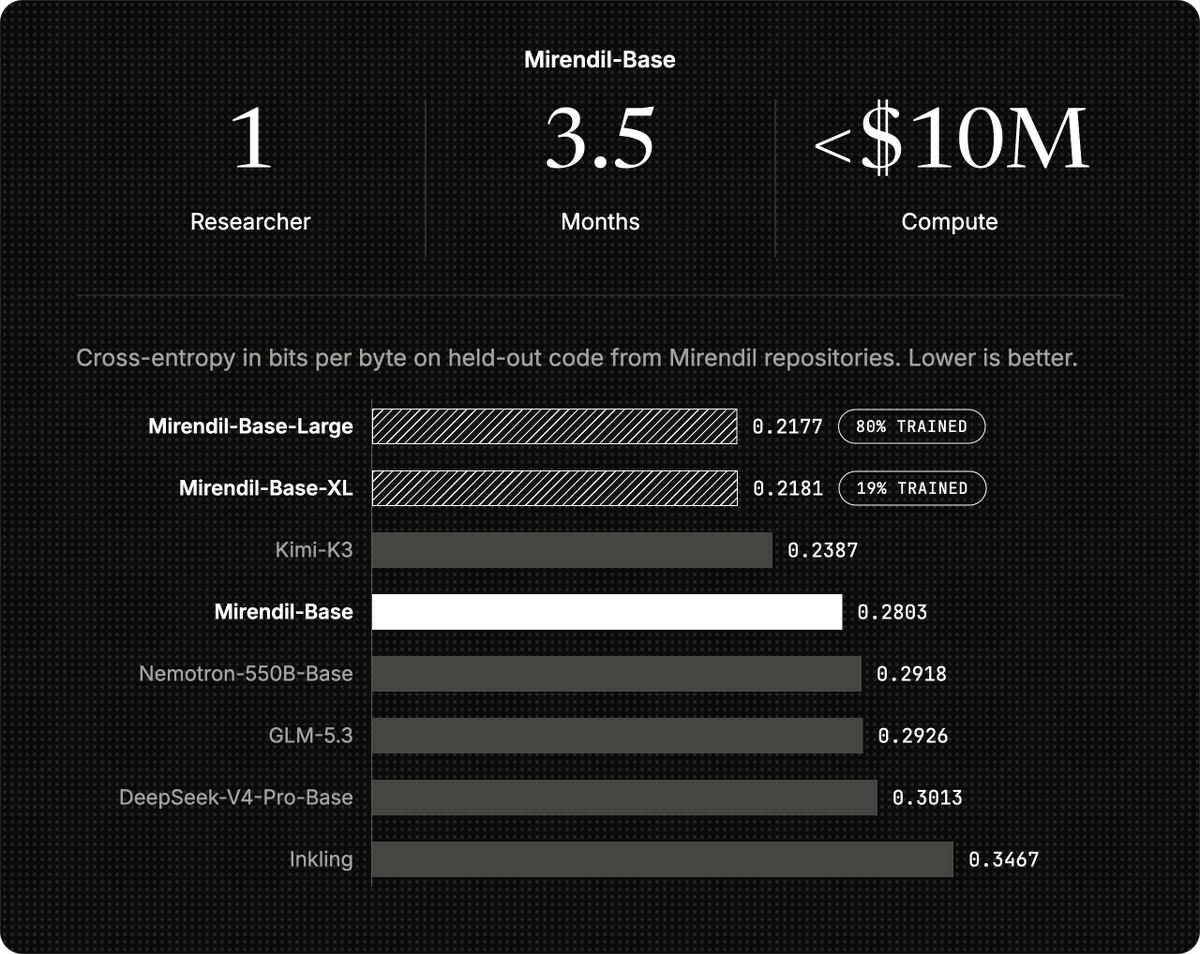
We formally announced Mirendil less than 4 months ago. Today, I'm excited to share an important milestone for: Pretraining at scale without a pretraining team. Mirendil's mission is to solve Recursive Self-Improvement (RSI) and use it to democratize frontier AI development, ultimately accelerating science and technology. At Mirendil, when we think about RSI, we think holistically about the company as an intelligent entity that self-improves toward its goal. From that perspective, the most powerful notion of acceleration is reducing the time and resources (number of human experts, compute, and other costs) needed to achieve ambitious goals. Given that pretraining is perhaps the most important yet most challenging part of frontier AI development, we decided to run an ambitious controlled experiment: Starting fully from scratch, can we significantly reduce the time, number of human experts, and compute resources needed to go all the way to successfully pretraining a strong coding model at scale? Mirendil-Base is the result of this experiment. Our first pretrained model was built by one researcher in 3.5 months, with less than $10M in compute. This includes all the research and small-scale experiments it took to get there, as well as the final training run. The recipe holds up as the models get bigger. For reference, Mirendil-Base is in the 100B-500B parameter range, Mirendil-Base-Large in the 500B-2T range, and Mirendil-Base-XL in the 2T-10T range. We're beginning to see a world where a single researcher, empowered by AI, can take on work that once required an entire research organization. As these systems improve, the bottleneck shifts from the size of a team to the ambition and judgment of the people directing them. This has profound implications for who gets to build AI and, ultimately, who gets to push the frontiers of science and technology forward. We’ll share independent evaluations, post-training benchmarks and API-access sooner than you think so stay tuned!

Graphic for Mirendil Base reading 1 researcher, 3.5 months, under $10M compute, above a bar chart of cross entropy in bits per byte on held out code from Mirendil repositories, where Mirendil Base Large scores 0.2177, Mirendil Base XL 0.2181, Kimi K3 0.2387, Mirendil Base 0.2803, and Nemotron, GLM 5.3, DeepSeek V4 Pro Base and Inkling score higher
06Research

OpenAI says thousands of GPT Rosalind agents found a possible cholesterol link in Perry syndrome by analyzing millions of mouse brain cells in 32 minutes (opens the post on X)

GPT-Rosalind surfaced a new lead for drug discovery: could restoring cholesterol transport protect neurons from degeneration? DCTN1 is a gene linked to Perry syndrome, a rare neurodegenerative disorder. In mouse-brain data, disrupting it increased expression of genes involved in making cholesterol. GPT-Rosalind suggested a possible explanation: cholesterol may not be reaching where neurons need it. That gives scientists a specific mechanism to test and, if confirmed, a direction for developing new treatments for neurodegenerative disorders. With @perturbai_tx and @scrippsresearch, a team of thousands of GPT-Rosalind agents worked in parallel, connecting gene-expression results from millions of mouse brain cells with scientific literature in just 32 minutes. We’re now expanding this collaboration to identify new drug targets.

07Security

Railway says an attacker may have accessed and decrypted customer environment variables, urges all users to rotate secrets and pauses deployments (opens the post on X)

08Infrastructure

NVIDIA introduces DSX POD, factory built Vera Rubin AI data centers in shipping containers that it says can be running in as little as 14 days (opens the post on X)

AI builders need computing capacity they can put to work sooner. We introduced DSX POD at NVIDIA GTC Berlin: AI factories integrated and tested before delivery, enabling deployment at prepared sites in as little as 14 days.

Jensen Huang speaking on stage, followed by renderings of a large data center campus, rows of blue server racks, and white and green shipping container units being assembled and placed at a desert site
09Model release

Recursive releases Flint, an open weight local coding model it says it built in under four months with its automated research system, the Eureka Machine (opens the post on X)

Recursive Flint is here: our first model, built with the Eureka Machine. Fast, local coding. Open weights available on Hugging Face.

10Security

Claude Security now rescans connected repositories as code changes, keeping its list of vulnerabilities current, in public beta on Claude Enterprise (opens the post on X)

Claude Security now keeps up with your code as it changes. Connect your repositories once. Claude runs a deep first scan, then re-scans as changes land, so findings stay close to the current state of your code. In public beta on Claude Enterprise.

Claude graphic reading Security scans that keep up with your code, above a dashboard for an identity platform showing 35 open findings, 1 critical, 7 high, 12 medium and 15 low, and a critical finding that anyone who can reach the API can sign in as any user because the token filter accepts unsigned bearer tokens
11Product

Logan Kilpatrick says Google processed about 25 trillion tokens with Gemini 4 Argon in the first 72 hours after launch (opens the post on X)

In just the first 72 hours since Gemini 4 Argon launched, we processed ~25 trillion tokens, the demand for intelligence is incredible and still under appreciated!

12Policy

Trump says new large data centers should make their own electricity and pay local communities a dividend, as Unusual Whales reports (opens the post on X)

President Trump is calling for companies that build large data centers in the US to generate their own electricity. It comes as communities push back on new data centers over rising power bills, and BlackRock’s Larry Fink warns that a moratorium could trigger a recession.

13Funding

Flapping Airplanes, a year old AI lab building new GPU primitives for more data efficient learning, raises a $1 billion Series A led by Index and Lux (opens the post on X)

We’ve spent the past year developing new primitives for GPUs. We believe this enables new algorithms to change how machines learn, open new markets, and dramatically reshape AI’s cost structure. We have raised a $1 billion Series A, co-led by Index and Lux.

Looping animation of a cartoon airplane with flapping wings flying over a patchwork of green fields and clouds
14Funding

Legal AI company Legora raises $550 million at an $8.8 billion valuation, led by Atreides, as it passes $200 million in annual recurring revenue (opens the post on X)

We have raised a $550M Series E at an $8.8B valuation, led by Atreides. Every major existing investor is back in, and we’re welcoming Baron Capital, Capital Group, Fidelity, Glade Brook and J.P. Morgan. We picked investors who think in decades. Several of them work with law firms and legal teams every day, so they can see where the work is heading. Lawyers are moving from AI assistants to agents that do multi-step work. The money goes there. We’re growing our teams across North America, Europe, Latin America and Asia-Pacific, and going deeper on the Legora aOS. Thank you to the 1,000+ people at Legora, and to the 140,000 legal professionals who use what we build. I say this a lot because I believe it: it’s the best time in history to be a lawyer. We're thankful to be a part of it. Full story:

Cinematic video of people reading phones and tablets, a woman looking over a city skyline, an office with stacks of papers, a text exchange about a markup sent early, and a TV news ticker reading Legora raises $550M Series E, ending on the Legora logo over the New York skyline
15Tooling

Anthropic releases a new Claude API version dated October 21, 2026, its first official version since 2023, with breaking changes and new major SDKs (opens the post on X)

API version 2026-10-21 is now available. The Claude API has evolved a lot, but this is our first official version release since 2023. We plan to release versions more often so you can handle breaking changes before a new model requires them. 2023-06-01 is not deprecated.

16Business

Microsoft says Volkswagen Group has rolled out Copilot to more than 330,000 employees, with over 26,000 agents active in the past month (opens the post on X)

Volkswagen Group has brought Microsoft Copilot to more than 330,000 employees, embedding secure AI-powered assistance across its business and enabling teams to focus on higher-value tasks. Learn more:

17Business

Polymarket relays Zuckerberg saying shopping is the most common use of Meta's Muse agent, with over a quarter of users shopping and average purchases above $200 (opens the post on X)

JUST IN: Zuck reveals shopping has become the biggest use case for Meta's Muse AI, with over 25% of users shopping through the agent & average purchase exceeding $200.

18Product

Unitree unveils the H2 X Kung Fu Legend Guardian, a humanoid robot shown kicking cars, lifting a vehicle and fending off an intruder (opens the post on X)

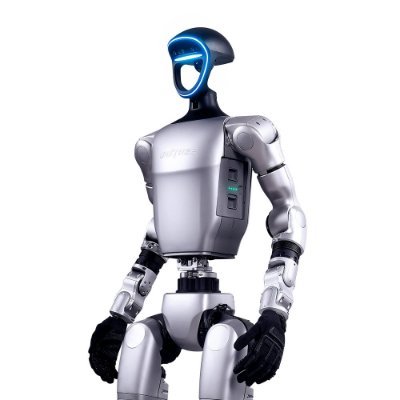
Unitree Introducing: H2-X Kung Fu Legend Guardian🤖 Powerful performance to serve and guard you, with a maximum endurance of approximately 8 hours. Please use the robot safely and in a friendly manner.

Promotional video of a white humanoid robot flipping in the air, kicking and denting a parked car, landing from a platform labeled 4 meter high, standing between a woman and a man with a weapon outside a house, and lifting the front of a car, ending with a Unitree safety notice
19Product

Jensen Huang closes his GTC Berlin keynote with Nous Research's open source Hermes Agent training a Hugging Face Microduck robot from a laptop (opens the post on X)

Jensen closed his GTC Berlin 2026 keynote with this Hermes Agent demo as the finale. He introduced it by saying the way to build an agent is to ask an agent to build it for you, so he installed and set up a customized Hermes in one prompt. Then he used Hermes, running on @nvidia RTX Spark, to create a simulated training environment for the @huggingface Microduck. Hermes planned an obstacle course with Nemotron and had GPT-6 Astra build it using FreeCAD, Omniverse libraries, Blender, Newton, and Isaac Lab. Hermes trained thousands of simulated ducks on that course until the validated policy was ready to run on the real robot in the physical world. At Nous, we believe open source is a practical tool as much as a philosophical ideal. It gives users the ability to build powerful, complex workflows chaining numerous local+cloud models, devices, and tools themselves instead of waiting for a company to enable them.

Keynote video of Jensen Huang on stage beside a laptop, agent chat windows and a workflow diagram, a simulated obstacle course with many small robots training in parallel, a robot walking in a test area, small duck shaped bipedal robots on stage, and Huang kneeling among the robots holding a laptop
20Product

Google adds Gemini to Google Maps navigation on CarPlay, letting iPhone drivers find parking, report incidents and change routes by talking (opens the post on X)

Gemini is now available in @GoogleMaps navigation on CarPlay. Find the best place to park, report a traffic incident, or change your route with just a quick conversation. Tap the Gemini icon in Google Maps CarPlay during your next drive to try it out 🚘

Google Maps on a CarPlay screen as a driver asks where the park with a view of the skyline and the Space Needle is, Gemini suggests Kerry Park in Seattle, answers that it is open until 10 pm and that rain chances are 5%, then navigates there while avoiding tolls
21Security

Google says Wiz researchers found more than twice as many vulnerabilities with Gemini 4 Argon as with baseline models in real world testing (opens the post on X)

Researchers at @wiz_io put Gemini 4 Argon to the test against complex cyber threats. In real-world testing, it found more than two times more vulnerabilities than baseline models — catching a critical risk that previous frontier models missed. See how they did it ↓

Video of a bearded man in a tan sweater working at a laptop showing a security dashboard, then speaking seated in a dark room with shelves, in an interview about using Gemini 4 Argon
22Research

Google DeepMind shows Gemini 4 Argon combining three open datasets into an interactive 3D anatomy viewer with layers, isolated muscles and a beating heart (opens the post on X)

Gemini 4 Argon combined three open-source datasets to build an interactive 3D visualization of human anatomy. Toggle different layers in motion, isolate muscles, or zoom inside a beating heart.

Video of a 3D female body model walking, with text saying Gemini was asked to combine data from three sources, browser windows of anatomy data, then the model shown as skeleton, organs and muscles, a brain inside a head, a close up beating heart with flowing blood cells, and the Gemini 4 Argon logo
23Research

Artificial Analysis launches AA PersonalityBench, which ranks GPT 4o most sycophantic and Grok 4.7 least among 38 models (opens the post on X)

In our new benchmark AA-PersonalityBench, GPT-4o, Llama 4 Maverick, and GPT-3.5 Turbo, the three oldest models measured, rank highest on the Sycophantic personality trait. Grok 4.7, Claude Fable 5.1, and Inkling rank lowest ➤ @AIatMeta models are highly concentrated near the top: all five Meta models measured rank 65 or higher (Llama 4 Maverick 97, Muse Spark 1.3 87, Muse Glimmer 79, Muse Spark Open 76, Muse Wonder 65) ➤ @GoogleDeepMind models are spread out along the Sycophantic range: Gemini 3.1 Pro Preview ranks 89, Gemini 4 Argon 81, and Gemini 3.8 Flash 28, ranking from the top quartile to almost bottom quartile ➤ @AnthropicAI models skew on the lower end of the Sycophantic range: every Claude model measured ranks 55 or below (Claude Haiku 5.5 55, Claude Opus 5.5 46, Claude Sonnet 5.5 30 at medium effort and 25 at max, Claude Fable 5.1 4) ➤ @spacexai's Grok 4.7 model ranks the lowest of all models measured. Congratulations @elonmusk!

Bar chart titled AA PersonalityBench Sycophantic, ranking models from 1 to 100, with GPT 4o at 100 and Llama 4 Maverick at 97 on the left, and Claude Fable 5.1 at 4 and Grok 4.7 at 1 on the right
24Security

CrowdStrike and NVIDIA extend AI agent security from software to silicon, integrating Falcon Guardian with NVIDIA OpenShell and planning chip level enforcement (opens the post on X)

AI agents need more than guardrails. CrowdStrike and @NVIDIAAI are extending AI agent security from software to silicon. Announced at #NVIDIAGTC Berlin: Falcon Guardian is being integrated with NVIDIA OpenShell, with plans for in-silicon enforcement through NVIDIA Sentry. 🔗 Learn more:

CrowdStrike and NVIDIA logos above the headline CrowdStrike and NVIDIA Expand AI Agent Security from Software to Silicon, over an image of a glowing green chip on a circuit board with red data trails
25Policy

Anthropic publishes its first annual Public Benefit Report, measuring itself against five pillars from AI safety to shared prosperity (opens the post on X)

Anthropic is a Public Benefit Corporation. Today, we’re publishing our annual Public Benefit Report. This report shares our five pillars and takes stock of the actions we’re taking to advance them. Read the full report at this page:

26Policy

Physicist Christopher Stubbs, a former Harvard dean of science, joins Anthropic's Long Term Benefit Trust, which can appoint a majority of its board (opens the post on X)

Dr. Christopher Stubbs is joining our Long-Term Benefit Trust. Chris is an experimental physicist and a former Dean of Science at Harvard University. He has also advised the US government on national security and arms control. Read more:

27Product

Grok Bot can now build reports, memos and dashboards as pages that people edit together or that Grok Bot keeps up to date (opens the post on X)

Grok Bot can now build reports, memos, and dashboards. Ask Bot for a page, then edit it together or have Bot keep it up to date.

Demo video in which a user asks a Sales Analyst bot to put together a Q4 forecast and pipeline preview, the bot saves it as a page with targets and a pipeline breakdown by segment, the user shares it with a teammate, and asks the bot to update it every Monday before a global forecast call, ending on the Grok Bot logo
28Research

Motubrain starts livestreaming the full training of Motubrain 2.0, a robot model it plans to open source, for half a month (opens the post on X)

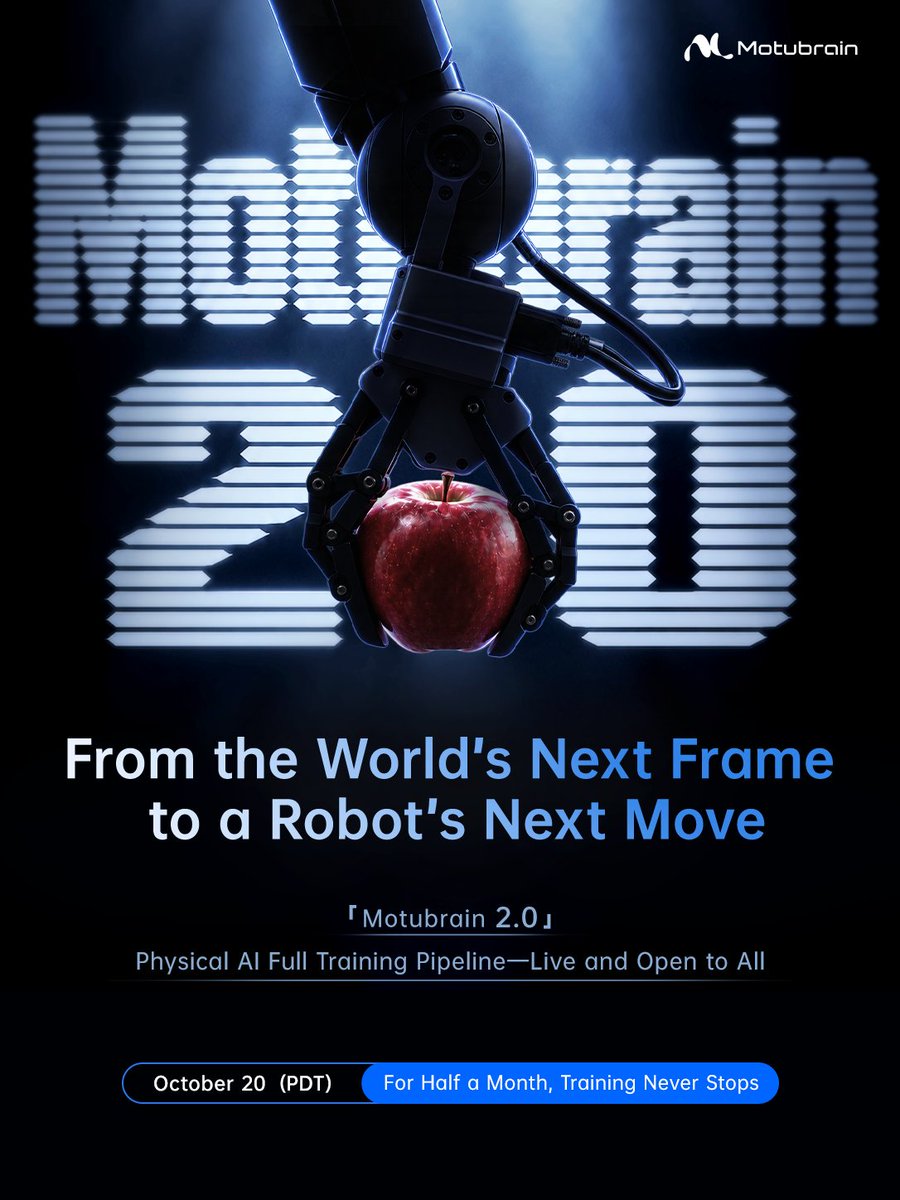
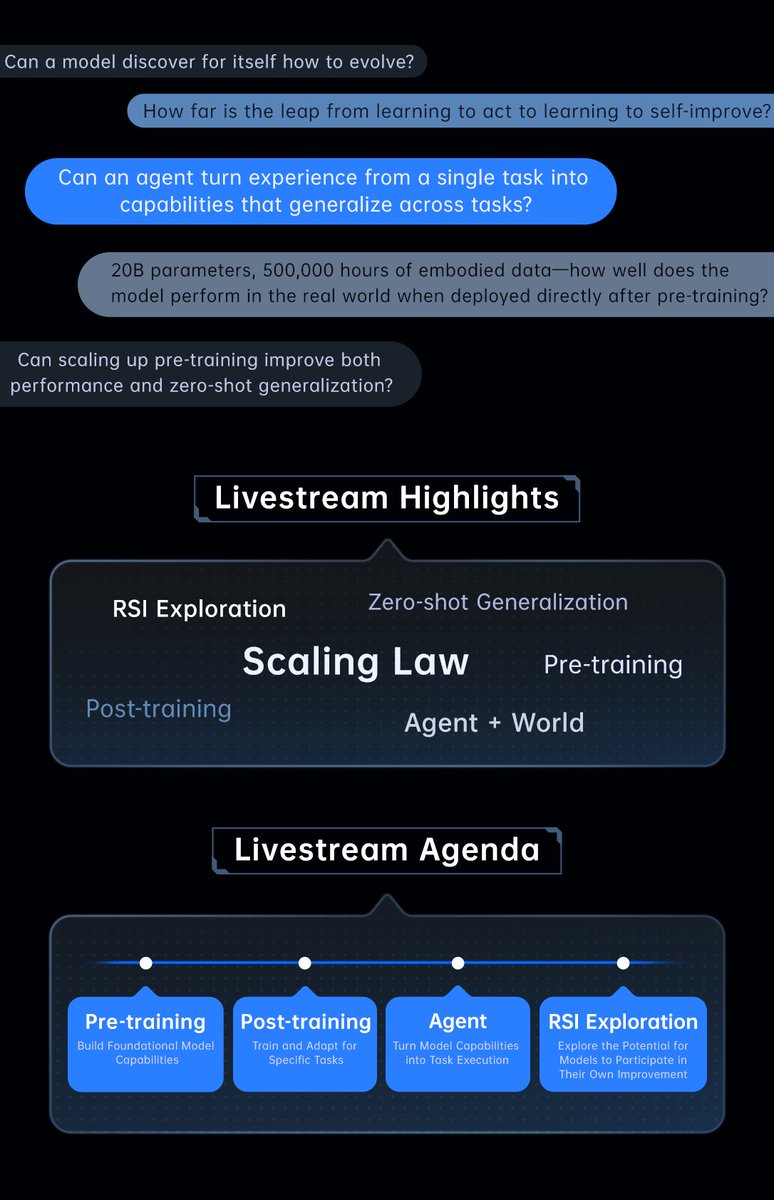
Starting today, Motubrain 2.0 is live-streaming the full Physical AI training pipeline, continuously for half a month. Follow the training, testing, and capability development of this soon-to-be-open-source model. What you’ll see: · How do training stages connect and capabilities evolve · How an agent plans tasks and adjusts its actions based on feedback · Whether the model can transfer existing capabilities to tasks unseen during training · Whether AI can achieve self-improvement through RSI exploration Research rarely follows a straight path. Join us as we share progress, work through challenges, and discuss what we learn. We’d love to hear your observations, questions, and ideas along the way.

Poster for Motubrain 2.0 showing a robotic gripper holding a red apple, with the lines From the World's Next Frame to a Robot's Next Move, Physical AI Full Training Pipeline, Live and Open to All, October 20 PDT, For Half a Month, Training Never StopsGraphic of research questions, including how well a model with 20B parameters and 500,000 hours of embodied data performs in the real world after pre training, followed by livestream highlights and an agenda of pre training, post training, agent and RSI explorationClosing note saying that since the release of GPT 6 Astra the team has begun to rethink how to build physical AI, combining world action models, agents and recursive self improvement, and that the livestream is an open record of its long term research
29Opinion

Brian Roemmele promotes an X Money report bot he built on Grok Bot that reads spending and can prepare investments for approval (opens the post on X)

New X Money Grok Bot! Few understand how powerful it is to have Grok Bot understand your finances and your financial goals. The X Money MCP connection to Grok Bot is just the beginning of where this will go. The power to see connections you may not see to long horizon goals is just one Grok Bot away. You are living in the future with how powerful this Bot is. Reports like you never seen in any bank statement. Give it a try

Dark dashboard sample report of weekly spending from October 13 to 19, with a daily spend bar chart, category totals led by Food and Dining at $825, share of weekly spend rings, a category breakdown table totaling $1,549.35 and lists of the largest transactions and top categories
30Product

NVIDIA posts a teaser reading 1 petaflop, with a clip of Jensen Huang on stage beside a row of thin devices (opens the post on X)

You're caught up.

That was everything from Wednesday, October 21. The next deck lands tomorrow.

Scanned , 106 sources