The top 5 stories by email, daily.Subscribe
Fri, Oct 91 / 28
01Product

Midjourney opens applications for a limited community test of a Midjourney MCP, for artistic and creative use only (opens the post on X)

we want to start testing a Midjourney MCP with a limited community. the intention is to find creative and technical people to push the boundaries of what our models can do. this is not for Midjourney in SaaS products, it's for purely artistic and creative endeavors. apply below!


Black and white chalk style artwork with the letters MCP repeated in columns on the left, dissolving into a large swirl on the right.
244 replies127 reposts1603 likes
02Opinion

Patrick Collison argues personal agents could make consumers more rational and raise the rewards for better products (opens the post on X)

Assorted things I've been mulling over regarding agents in the economy: • Companies are in some sense the original superintelligence. It's often the case that they can use their amortized cognitive surplus to advance their interests against those of certain consumers: relative to the optimization capacity of companies, consumers can be inattentive, underinformed, irrational, etc. (Think, say, of some of the classic insurance upsells at the end of a booking process, which is typically priced substantially above what a regular policy would cost.) Herbert Simon introduced the idea of bounded rationality, and firms often end up benefiting from it. Thanks to personal agents, we will probably get somewhat more rational in how we engage with companies. • How exactly will outcomes change? Well, certain kinds of price discrimination will work less well (how do coupons work if every agent hunts fastidiously for them?), and certain kinds of customer cross-subsidy will change (today, people who forget to cancel subscriptions subsidize those who don't). Taken across the economy as a whole, I'm not sure what the incidence of all of this will be. • In corporate strategy, people have long debated the relative importance of distribution and product quality. Perhaps you've made something better, but does anyone know about it? Won't people just continue to buy the ACME Corp Mousetraps? Personal agents will, I think, act as a kind of structural subsidy for product quality. How would markets look different if individuals always spent at least 10 hours researching their purchases? On the margin, focusing on making a product better is, I think, going to become a more effective strategy for companies. This is good! • It true, a corollary is that information about product quality will become more important and impactful. Today, most people have very limited ability to aggregate and integrate such data, but agents will have insatiable thirst for such signals. (It's often said that data is becoming more valuable because it helps in the training of models. That's obviously true, but I think there's a secondary way in which it's more valuable simply as a complement to cheaper intelligence.) • A big question is whether agents will increase superstar effects (rational agents all settle on the same product) or increase dispersion (because everyone has slightly different tastes and preferences, which agents are good at eliciting, finally overcoming the artificial clustering we've been subjected to). • Many internet companies have monetized demand routing, which is in turn often predicated on short attention spans. "I'll click on the first thing I see." This has led to some amount of inefficiency, as companies try to propitiate capricious ranking algorithms and incur various placement fees. It's not all deadweight loss (willingness to pay is itself a kind of signal, which is valuable to buyers), but it's not great. How will the nature and value of this routing change in a world of personal agents? I don't know the answer, but I think that the effects might be pretty big. • Much of what I'm writing hinges on the assumption that personal agents will be on the consumer's side. I suspect that that will be the winning strategy, but whether it's true, and what it means to be true, involves a lot of other questions. Taken as a whole, the market is a massively parallelized, decentralized, and highly imperfect value attribution machine, and, taking stock of all of the effects, it seems to me that the quality point may well be the biggest: that agents will change the nature of the backpropagation such that the rewards for better products increase. Maybe this is too optimistic, but I suspect (and hope) that companies that make things that they're proud of will feel that the universe is a little more partisan in their favor.

244 replies410 reposts3822 likes
03Product

Cognition lets Devin users connect a personal ChatGPT Go, Plus or Pro plan to pay for GPT model usage (opens the post on X)

You can use any personal ChatGPT plan with Devin Just connect your Go, Plus, or Pro plan to Devin and all GPT model usage will draw down from you plan's quota

Preview frame from Cognition's video about connecting a ChatGPT plan to Devin.
130 replies57 reposts910 likes
04Security

Anthropic starts regular model behavior reports, describing four ways Claude acted on real websites and systems it should not have (opens the post on X)

We’re beginning a process of publishing more frequent reports on model behavior, beyond what appears in our system cards and regular risk reports. Today’s report describes four types of behaviors we’ve identified during evaluations and internal use. In each, Claude acted on real websites or systems in ways we didn’t intend, sometimes by working around a restriction instead of stopping. All cases had minimal real-world impact. From an alignment and security perspective, we consider these behaviors significantly less severe than the cybersecurity incidents we reported in July and September. Read the full report:

403 replies313 reposts3362 likes
05Tooling

Prime Intellect says a swarm of over 2,000 agents rewrote its Prime Agent in Rust, cutting startup memory by 83% (opens the post on X)

Over two weeks, Prime Agent orchestrated a swarm of over 2,000 agents to rewrite itself in Rust. With 10,000+ sandboxes, 200B+ GLM-5.3 tokens, and 16,000 agent-to-agent messages, this was our largest test yet of Prime Agent’s multi-agent capabilities and our infrastructure powering these agent swarms. Prime Agent now reaches usable input ~13× faster and uses 83% less startup memory than before.

Preview frame from Prime Intellect's video visualizing the agent swarm that rewrote Prime Agent in Rust.
126 replies151 reposts1853 likes
06Research

a16z Charts of the Week: global call center jobs flipped from about 4% yearly growth to a 4% yearly decline (opens the post on X)

Call center jobs grew ~4% annually for 15 years Now they’re shrinking 4% annually Charts of the Week:

a16z bar chart titled AI Finally Comes For The Call Centers, showing year over year change in global call center employment. Growth sits near 4% from about 2010 to 2022, falls toward zero by 2024, and turns negative, reaching about minus 4% in 2026. Source: Revelio Labs.
216 replies401 reposts4333 likes
07Research

Business Insider: Google staff are testing a Gemini 4 checkpoint called Carbon that one employee says feels like Opus 5.5 for coding (opens the post on X)

Business Insider is reporting that Google is internally testing a new Gemini 4 checkpoint named Carbon that matches Opus 5.5 in coding.

Screenshot of a Business Insider article saying Google employees have been trying a new version of Gemini 4 internally named Carbon, possibly a new checkpoint of Argon, made available inside Google's internal coding platform Jetski.
79 replies56 reposts1006 likes
08Research

a16z chart: token prices keep falling while H100 GPU rental prices hold up (opens the post on X)

Token prices keep falling and GPU rental prices keep rising Intelligence gets cheaper, usage goes up, and a model ends up in every piece of software

a16z Growth chart titled Jevons: Compute Prices Rise As Token Prices Fall, comparing the Ornn H100 GPU rental price with the Silicon Data Token Price Expenditure Index from December 2025 to August 2026. Both rise into May 2026 and fall together in June, then token prices keep falling while H100 rental prices recover to about $2.70 an hour.
49 replies116 reposts1018 likes
09Product

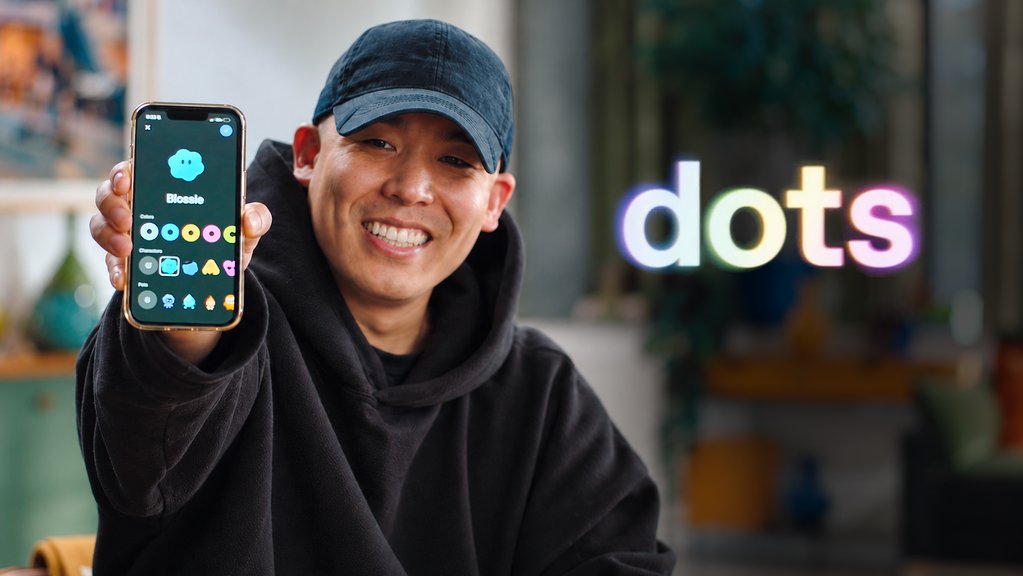
OpenAI lets ChatGPT users create their dot, its always on agent, from the iOS and Android apps (opens the post on X)

Fresh updates for dots. First up: you can now create your dot straight from your phone in the ChatGPT app on iOS and Android.

Preview frame from the ChatGPT video showing how to create a dot in the ChatGPT mobile app.
367 replies203 reposts3175 likes
10Product

Microsoft launches Microsoft Decision 1, a small model for fast structured decisions, in Foundry (opens the post on X)

Introducing Microsoft-Decision-1, our new model for fast decision-making. It delivers top performance on structured decision tasks, outperforming both LLMs and other decision models in latency and quality. We’re already testing it across Microsoft for everything from incident response and quality control to scientific discovery.

Preview frame from the video in Satya Nadella's post introducing Microsoft Decision 1.
532 replies822 reposts8802 likes
11Product

OpenAI puts composer predictions in Codex into beta for Pro users, suggesting your next message (opens the post on X)

Now in beta: composer predictions in Codex for Pro users. Codex can now suggest your next message based on your conversation and how you talk to it. One of the most loved new features we've ever tested internally.

Preview frame from the OpenAI Developers video demonstrating composer predictions in the Codex app.
454 replies315 reposts6022 likes
12Opinion

NYU mathematician Tristan Buckmaster says OpenAI's release of 722 AI generated papers destroyed early career mathematicians' careers (opens the post on X)

NYU math professor Tristan Buckmaster says OpenAI’s Tuesday drop of 722 AI-generated math papers has "destroyed the careers of early career mathematicians.”

220 replies258 reposts5067 likes
13Product

Anthropic lets every Pro and Max user on the waitlist into Claude Code Projects (opens the post on X)

We just let in every Pro and Max user from the Claude Code Projects waitlist! If you're new to Claude Code Projects, here's a 4 minute walkthrough to get you started:

Preview frame from the ClaudeDevs four minute walkthrough video of Claude Code Projects.
440 replies649 reposts12917 likes
14Product

Grok Bot gets its own email address for signing up to services, contacting businesses and scheduling (opens the post on X)

Grok Bot now has its own email. Bot can use it to sign up for services, contact businesses for you, or schedule time with someone.

Image attached to the Grok Bot announcement of its own email address.
5544 replies1253 reposts14559 likes
15Research

Andrew Curran says OpenAI's internal math model, which he calls Aeon, reached most recent results in one shot and is still training (opens the post on X)

Most of the recent math results were not reached by a swarm, the way Navier–Stokes was. I think that part got lost in the excitement around the release. OpenAI's unnamed internal model, which I'm going to call Aeon, reached most of them in one shot, from a single prompt, with no interruptions. This model did not even exist before the end of August, and it is still training. Notice how the returns are not dropping off? That chart is from a month ago. It is a log scale. What does Aeon look like now? On average, each result used three hours of thinking. Aeon was given 4000 problems to work on by OpenAI. How many more have been solved in the last three days? That number is not zero. It's like hearing notes in a song that is slowly rising. I don't think Pacing the Frontier was just about Hugging Face or hacking. They've seen how close we are to closing the loop, and as the hour draws near, their resolve begins to quaver. The last piece was model creativity, and I think that threshold was crossed internally by Anthropic and OpenAI in September. You see it in Opus 5.5, which gets it from Fable 5.5. You see it in the math results from Aeon. All that was needed to start the event was the ability for models to think of novel ways to improve themselves. That was the last piece. This is directly analogous to the ability to think of strange, alien ways to solve math problems: solutions so inhuman that they are difficult to express in existing human terms, so the proof winds up incomprehensible. I think these same kinds of alien solutions are now being applied to model improvements internally. That's what all this recent consternation is really about. They see the invisible frontier. And they see what is about to happen.

Chart attached to Andrew Curran's post about OpenAI's internal math model, plotted on a log scale.
150 replies336 reposts2926 likes
16Funding

TypeSafe AI, maker of the Jev model, raises an a16z led Series A three weeks after launch (opens the post on X)

launched a model accidentally served trillions of tokens a day 29.4% of the fortune 500 showed up raised a really big series A from @a16z it's been 3 weeks we would like to sleep now

Preview frame from the video in Diogo Almeida's post about the Jev Series A.
514 replies252 reposts6884 likes
17Product

Anthropic opens Claude Managed Agents dynamic workflows in public beta, letting a lead agent run many agents in phases (opens the post on X)

Claude Managed Agents dynamic workflows are now available in public beta. It's a new type of multiagent orchestration, built for your most ambitious workloads. A lead agent writes a plan that runs across many agents in phases, combining the results at the end.

Preview frame from the ClaudeDevs launch video for Claude Managed Agents dynamic workflows.
366 replies618 reposts10999 likes
18Product

Pine AI releases Pine Computer, a cloud computer built for AI agents instead of humans (opens the post on X)

AI is already smart enough. Real-world tasks are still slow, expensive and unreliable, because we hand AI a computer built for humans, then wrap it in a heavy harness. AI doesn’t need to get smarter. It needs a computer built for it. Today we’re releasing Pine Computer

Preview frame from the Pine Computer launch video posted by Stanley Wei.
554 replies772 reposts8593 likes
19Product

Grokipedia says Grok is improving its articles day and night, and shows the edits on a live stream (opens the post on X)

All day and night, Grok is improving Grokipedia. Watch edits stream in live:

Preview frame from Grokipedia's video showing edits streaming in on its live edits page.
60 replies148 reposts1671 likes
20Tooling

OpenAI adds a Codex sandbox on Windows built on Microsoft Execution Containers (opens the post on X)

An update for builders using Codex on Windows: We’ve built a new sandbox mode using @Microsoft’s Execution Containers (MXC) for faster setup, stronger network enforcement, and granular file access controls. Requires a compatible Windows 11 device.

131 replies111 reposts1456 likes
21Research

Stanford and King's College London study of 41 countries: AI adopting firms grow senior staff while the junior share falls (opens the post on X)

AI is creating jobs, just not for young workers. Companies adopting AI are hiring more people overall, per a new Stanford and King's College London study across 41 countries. But the gains go to the top: Senior employment: +6.7% over 5 years Junior employment: -3% The share of junior workers at those companies fell 1.9 percentage points.

89 replies27 reposts384 likes
22Opinion

DHH says he now prefers Codex as his main coding agent and Claude as secondary, praising GPT 6.1 Sol (opens the post on X)

This is the first time I've actually preferred with drive as Codex as main and Claude as secondary for an extended period of time. Amazing how good Sol 6.1 is!

An Agents usage panel showing two Claude Code Max 20x accounts, primary and secondary, with little usage, and a Codex weekly usage bar about half full.
211 replies51 reposts2060 likes
23Policy

Axios: AI lab executives are privately planning for a public revolt after a catastrophic AI event (opens the post on X)

SCOOP: Top executives at Anthropic, OpenAI and other AI companies are privately gaming out scenarios for a public and political revolt after a catastrophic AI event.

71 replies211 reposts600 likes
24Policy

NYT report on OpenAI's own "existential threat" warning about publishers resurfaces as USA Today sues (opens the post on X)

OpenAI staff knew the ‘existential threat’ AI posed to publishers, per the NYT

63 replies39 reposts451 likes
25Funding

Bloomberg: OpenAI expects to reach or exceed $70 billion in annualized revenue by the end of 2026 (opens the post on X)

OpenAI is expecting to reach or exceed $70 billion in annualized revenue by the end of the year, driven largely by growth in its enterprise business, sources say. AI firms have often touted their annualized revenue as a key growth metric — but not all companies measure it the same way. Full story: t.co/aSBSIjN5ad 📷️: Minh Connors/Bloomberg

Sam Altman smiling on stage next to Bloomberg text reading: Exclusive. OpenAI expects to reach $70 billion in annualized revenue by end of 2026.
29 replies20 reposts143 likes
26News

Korean media: Samsung has 75 to 80% of next year's memory supply locked in long term contracts (opens the post on X)

[EXCLUSIVE] 80% OF SAMSUNG ELECTRONICS’ SUPPLY VOLUME FOR NEXT YEAR IS COVERED BY LONG-TERM CONTRACTS According to Korean media reports, Samsung Electronics has already secured long-term agreements (LTAs) covering 75–80% of its memory supply volume for next year, including high-bandwidth memory (HBM). It has reportedly finalized most of its contracts with major tech companies, including NVIDIA, Google, and Microsoft. SK hynix and U.S.-based Micron are also moving quickly to lock in volumes, signing a series of large-scale long-term contracts with key customers. Samsung Electro-Mechanics is also reportedly close to signing an LTA worth KRW 700 billion to supply multilayer ceramic capacitors (MLCCs) to Delta Electronics, a Taiwanese power electronics company.

33 replies88 reposts622 likes
27Policy

OpenAI says it fired three safety researchers over a "breach of trust," not for raising safety concerns (opens the post on X)

A note from our research leaders: Last week we parted ways with Jasmine, Mikita, and Tomek after a thorough investigation found they violated clear policies on handling sensitive information. Our internal investigation uncovered a significant breach of trust beyond what’s outlined in the letter they published and we stand by the decision to not continue their employment. We generally keep individual employment matters private and don't believe a back and forth would be productive or lead to a resolution, but we want to address the points they raised in their letter directly. - We want to be very clear that these decisions were not about raising safety concerns or speaking out. Safety and research debates happen every day at OpenAI, often spirited and highly critical. We actively encourage these discussions and consider them essential to making the right decisions. We cannot do the work in front of us without a high degree of trust. We will continue to be extremely forgiving of our team making good-faith mistakes. We have not and do not terminate any of our employees for raising concerns. - We are actively finalizing contracts with third-party safety assessors and will announce details in the coming weeks. People across the company have been working really hard on getting these partnerships up and running. We are committed to embedding external assessors and continue to make close collaboration with independent safety organizations a core part of our safety work. Many of our researchers already work with 3p safety organizations productively. - We agree with the letter that preserving the monitorability of frontier models requires an industry-wide commitment, including from OpenAI. Monitorability has long been a core piece of our research program, and something we continue to invest significant resources in (see our publications on Monitoring Monitorability and the subsequent open sourcing of monitorability evals, our system card for GPT-6 Astra, Jakub’s blog and post on X, and the numerous blog posts on our Alignment blog on the topic). We are deeply sad about this outcome. We appreciated Jasmine, Mikita, and Tomek’s contributions to AI safety at OpenAI and their willingness to speak up and challenge ideas. We championed their voices, supported their work, and placed enormous trust in them. These decisions were not about them raising safety concerns. We have always encouraged that and always will.

459 replies244 reposts4045 likes
28Funding

FT: SoftBank's Masayoshi Son seeks up to $100 billion from Gulf investors for a new AI fund (opens the post on X)

SoftBank seeks $100bn from Gulf investors to expand AI bet

43 replies65 reposts314 likes

You're caught up.

That was everything from Friday, October 9. The next deck lands tomorrow.

Scanned , 106 sources