Lauren Shares Slides From an Upcoming AI Engineer Talk on Shipping 30x More Code Without Reading It

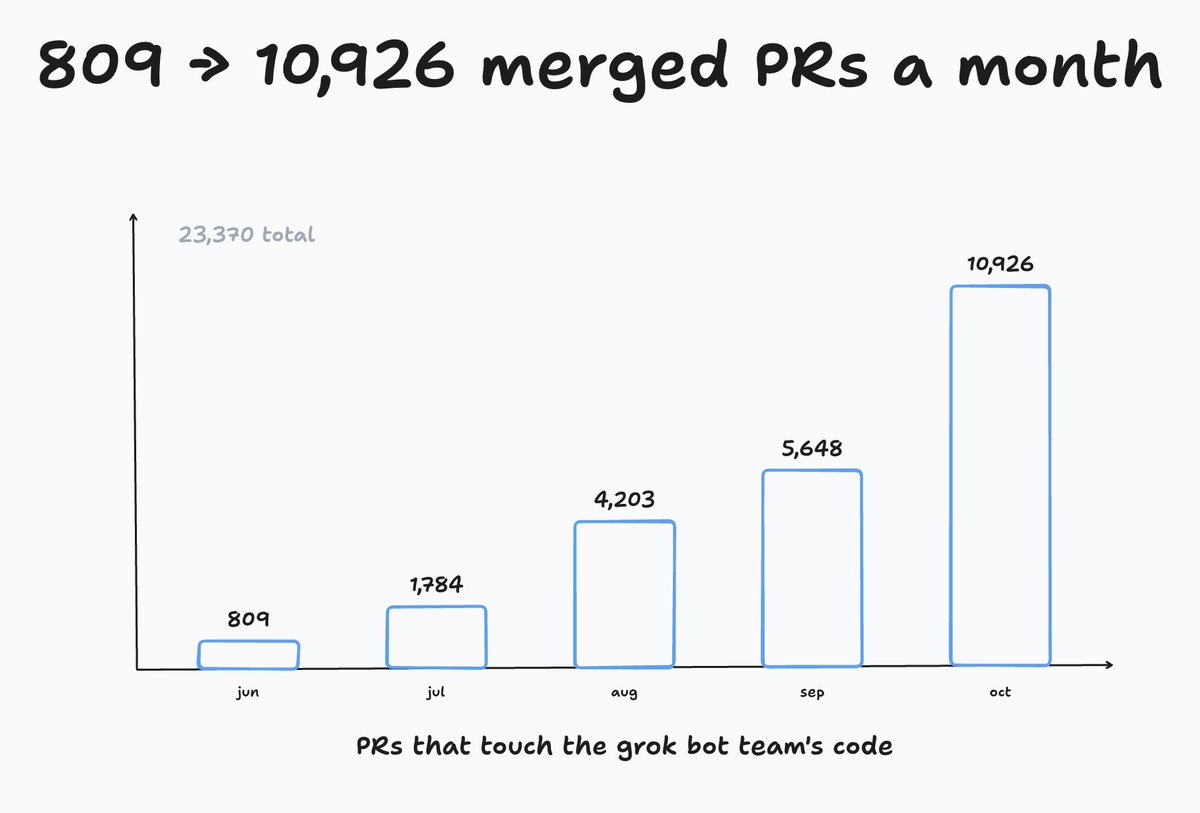
some fun slides from my upcoming talk @aiDotEngineer very excited to share how we ship crazy amounts of code (30x'd) without reading it, yet perf is as good if not better then when we launched there's a lot more to improve of course, and the ceiling is far from being reached, but given the relentless shipping speed and our high bar for polish, i think that our agent friendly architecture bets are paying off at taming the slop fun fact: ~230 people landed at least 1 PR to grok bot in october!

Context
A team claiming it ships far more AI written code without reading it, while keeping speed, is a data point on how agent heavy teams work.
Lauren (@poteto) works on Grok Bot and is giving a talk at AI Engineer (@aiDotEngineer), a conference for people building with AI. The post is a teaser for that talk.
Deep dive
Lauren (@poteto) posted slides on Nov 4 from an upcoming talk at AI Engineer. She wrote that the talk covers how her team ships crazy amounts of code, which she put at 30x, without reading it, while performance is as good as or better than at launch.
She wrote that there is still a lot to improve and the ceiling is far from reached, but that given the shipping speed and the team's high bar for polish, its agent friendly architecture bets are paying off at taming the slop. She added that about 230 people landed at least one pull request to Grok Bot in October.
The first slide shows merged pull requests a month that touch the Grok Bot team's code, rising from 809 in June to 1,784 in July, 4,203 in August, 5,648 in September and 10,926 in October, with 23,370 in total. The second compares May with now: cold launch fell 31% to 1,831 ms, relaunch fell 35% to 1,200 ms, and typing delay in a long chat fell 61% at the median.
These are the team's own figures. The post is a preview, so the full method will come in the talk.
What to expect next
Watch for the full talk from AI Engineer, which should explain the architecture choices and how the team checks code it does not read by hand. Other teams may share similar numbers on agent written code. Critics will likely ask how bugs and security issues are caught, so any data on defect rates would matter.
The slides may also spark debate on how much human code review teams still need.