Rihard Jarc shares a former Google employee's view that data centers and power, not GPUs, are the real AI bottleneck, and Elon Musk calls that an oversimplification

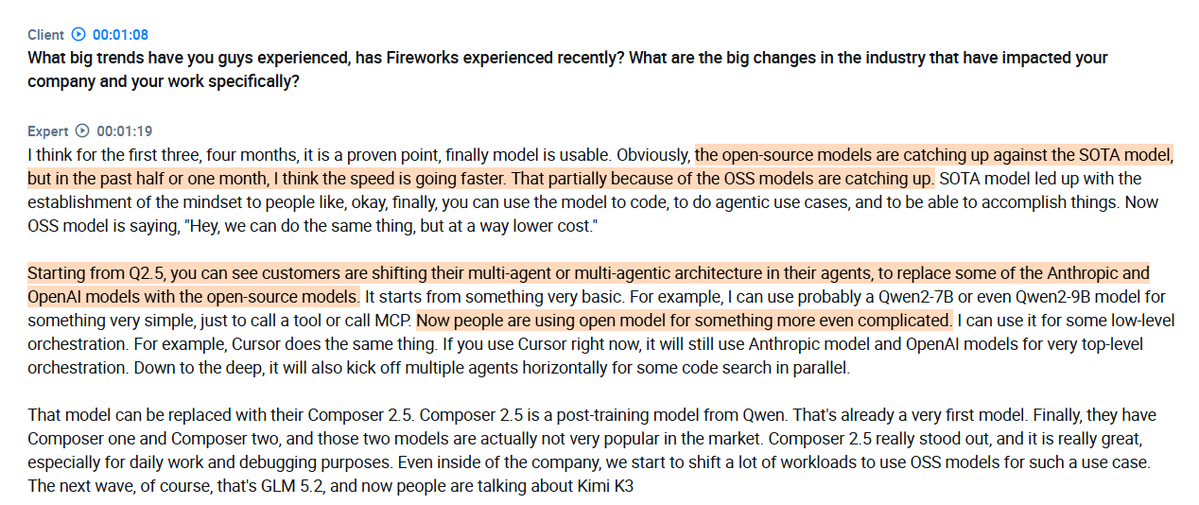
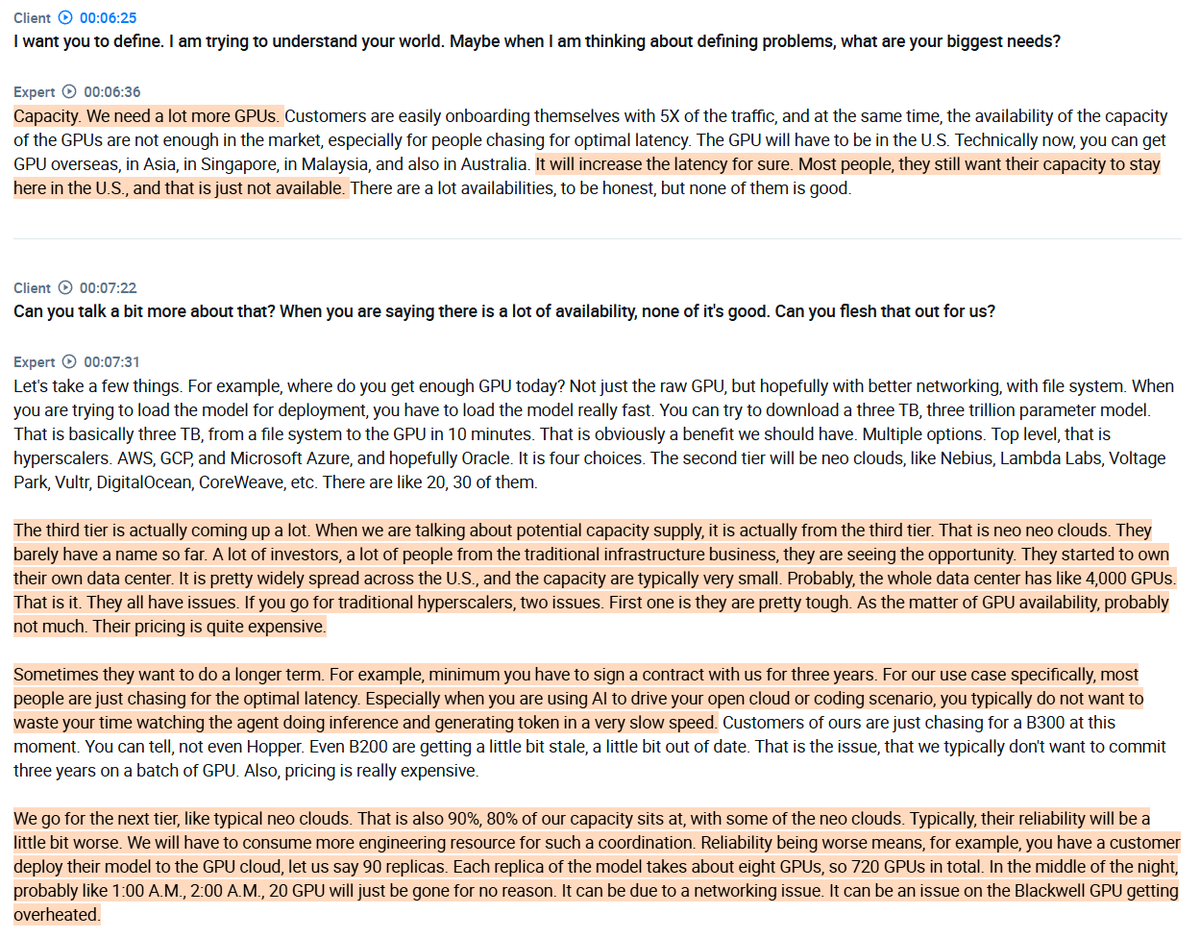
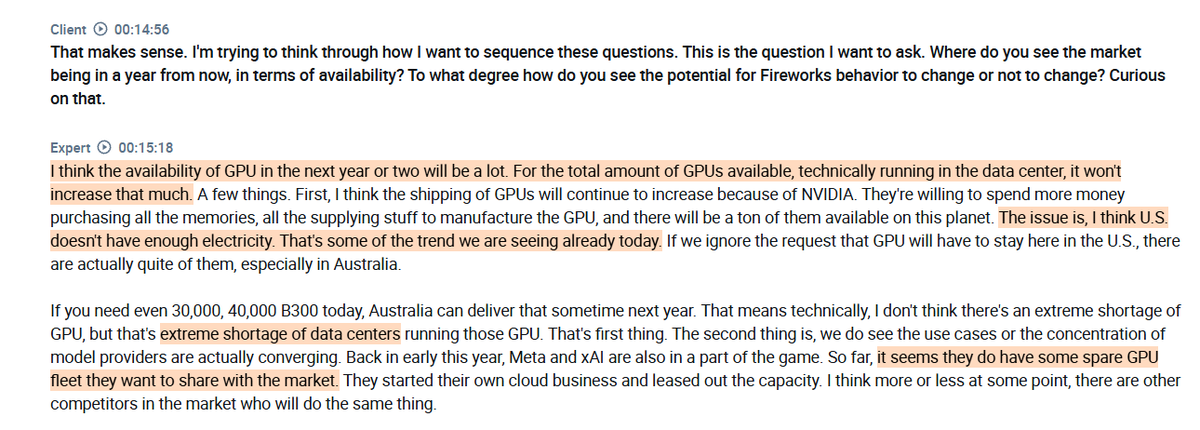
Former $GOOGL employee on why data center capacity and electricity are the real bottlenecks, not GPU production itself, and how unreliable some of the neoclouds are ($AMZN, $GOOGL, $MSFT, $NVDA): 1. According to the expert, open-source models are closing the gap with frontier models faster than expected, with customers increasingly replacing Anthropic and OpenAI models in multi-agent architectures with open-source alternatives starting from Q2 of this year. The shift started with simple tasks like tool calling and MCP, but has moved up the stack to low-level orchestration. 2. The expert identifies capacity as the biggest constraint at the moment, with certain companies' traffic growing 5x while GPU availability, particularly in the U.S. where latency requirements are tightest, simply cannot keep up. Sourcing capacity overseas in Asia or Australia is technically possible but adds latency that most customers will not accept. 3. Hyperscalers offer reliability but are expensive, require multi-year commitments of three or more years, and have limited availability of the latest hardware, with customers already chasing B300s. AI-native companies tend to gravitate toward neoclouds due to hyperscaler pricing and contract rigidity, but neoclouds come with their own reliability issues, with GPUs dropping off unexpectedly and requiring engineering resources to manage fleet stability around the clock. 4. The third tier consists of smaller independent operators who have invested in GPU racks, seeing the opportunity to lease out capacity and recoup costs within a year or two, with the remainder being pure profit. The expert describes these as essentially unusable in practice, with operators who do nothing more than find land, install racks, connect electricity, and set up cooling, with no real cloud management, maintenance, or operational expertise behind them. 5. The expert expects overall GPU availability to increase meaningfully over the next year or two, with $NVDA continuing to ramp production. The real bottleneck is not GPUs themselves but data center capacity and electricity in the U.S. On the supply side, the expert also sees players $SPCX beginning to lease out spare capacity to the market, with more likely to follow. 6. The expert notes that U.S.-based neoclouds typically require 20-30% prepayment upfront, with the remainder paid monthly or quarterly over the contract term, and rebates negotiated at the end for any reliability incidents like traffic loss. APAC-based providers operate differently, with no prepayment required at all. found on @AlphaSenseInc

Context
How much of the AI buildout is held back by power and buildings, rather than chips, shapes where the next investments go.
This is secondhand analysis: Rihard Jarc, a tech investor who writes the UncoverAlpha newsletter, summarized an expert call transcript he found on AlphaSense, a research platform. The expert is unnamed and described only as a former Google employee, so the claims are one person's view and cannot be checked.
Deep dive
On October 20, Rihard Jarc posted a six point summary of an interview with a former Google employee on why data center capacity and electricity are the real bottlenecks, not GPU production itself, and how unreliable some neoclouds are.
According to the summary, the expert said open source models are closing the gap with frontier models faster than expected, with customers replacing Anthropic and OpenAI models in multi agent systems since the second quarter. The expert said some companies' traffic is growing five times while US GPU supply cannot keep up, and capacity in Asia or Australia adds latency most customers reject. The transcript screenshots appear to come from an inference provider's perspective and mention Fireworks.
The expert described three tiers of supply: hyperscalers that are reliable but expensive and need commitments of three years or more, neoclouds whose GPUs can drop off unexpectedly, and small rack operators the expert called essentially unusable. The expert expects GPU supply to rise meaningfully over the next year or two, and said US neoclouds typically want 20 to 30 percent prepayment.
Elon Musk quoted the post, saying lack of electricity is an oversimplification. Everything is hard about bringing massive compute online at extremely high speed, he wrote, adding that with twice as much time it would be relatively easy. Musk's companies are building large AI compute sites, so he speaks from experience but also as an interested party.
This is one unnamed expert's opinion relayed secondhand, and none of the figures were verified.
What to expect next
Watch whether reports from utilities, data center developers and chip suppliers back the view that power and buildings, not chips, are the limit. Delays like Amazon's staged server racks, covered in this deck on October 19, are one sign. Also watch whether open source models keep taking work from Anthropic and OpenAI in agent systems, a claim that usage data from inference providers could confirm or refute.