The Kobeissi Letter says just 10 stocks drove 70% of the S&P 500's gain since March 30, with Nvidia alone at 13%

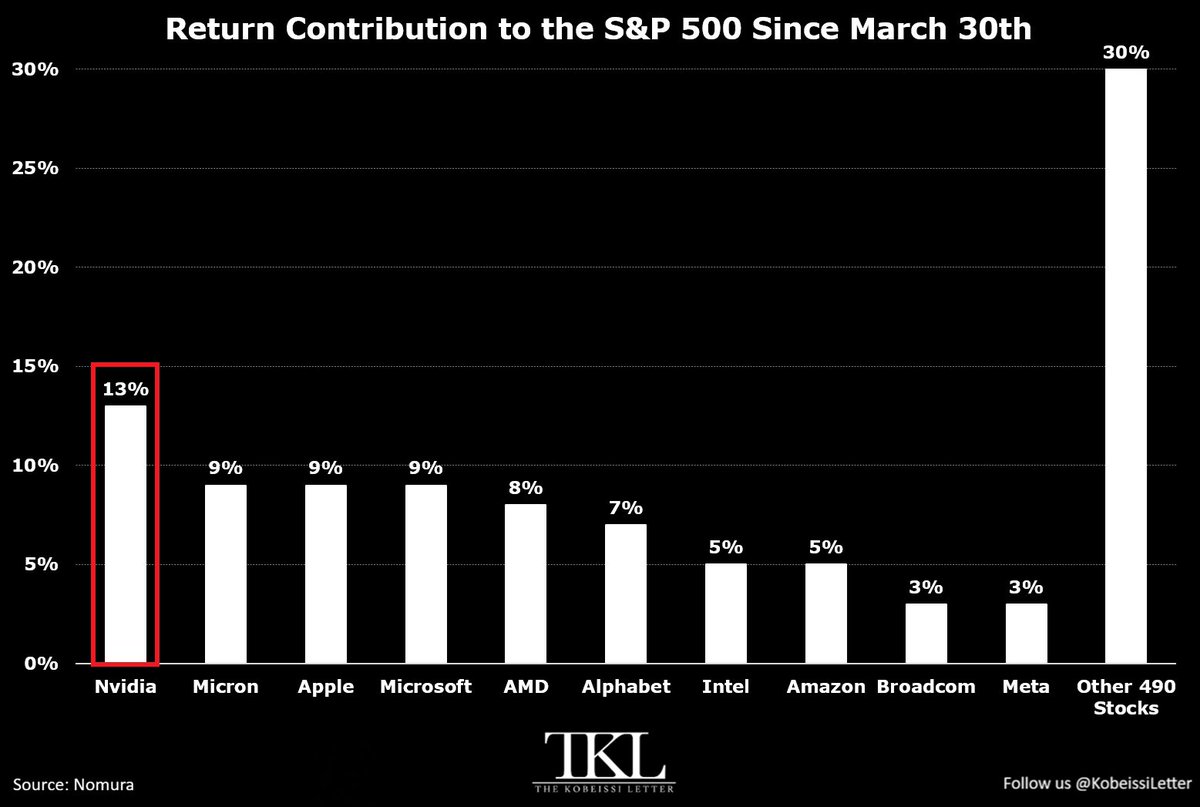
Absolutely incredible. Just 10 stocks have driven 70% of the S&P 500’s gain since March 30th. These stocks have added +16 percentage points to the index’s +23% gain over this period. Nvidia, $NVDA, has contributed the most, accounting for 13% of the S&P 500's gain, or +3 percentage points. This is followed by Micron, $MU, Apple, $AAPL, and Microsoft, $MSFT, each accounting for 9% of the S&P 500’s advance, adding +2 percentage points. Return contributions of AMD, $AMD, and Alphabet, $GOOGL, have been 8% and 7%, respectively. Meanwhile, the remaining 490 stocks have accounted for just 30% of the S&P 500's gain since March 30th, adding +7 percentage points. Diversification is dead.
Context
The rally is heavily concentrated in AI chip and big tech names, so any wobble in AI spending would hit index investors far harder than a broad market chart suggests.
The Kobeissi Letter is a market commentary account, and this post summarizes data rather than reporting new information. The chart attached to the post credits Nomura as its source; the underlying Nomura note was not found, so the figures are as presented by Kobeissi. The chart image appears to have been uploaded to X about two days before this post, so the data may have been calculated slightly earlier.
Deep dive
On October 14, The Kobeissi Letter posted that just 10 stocks have driven 70% of the S&P 500's gain since March 30. According to the post, those stocks added 16 percentage points to the index's 23% gain over that period.
Kobeissi says Nvidia contributed the most, accounting for 13% of the gain, or about 3 percentage points. Micron, Apple and Microsoft each accounted for 9%, adding about 2 points each, followed by AMD at 8% and Alphabet at 7%. The attached chart, credited to Nomura, also shows Intel and Amazon at 5% each and Broadcom and Meta at 3% each. The remaining 490 stocks, by Kobeissi's count, accounted for just 30% of the gain, or about 7 percentage points.
The ten bars in the chart add up to 71%, close to the 70% in the post, which suggests rounding. Several of the leaders are AI hardware suppliers: Nvidia and AMD sell AI accelerators, and Micron sells the memory used in them, while Microsoft, Alphabet, Amazon and Meta are among the largest buyers of AI infrastructure.
Kobeissi ends the post with the line Diversification is dead, which is the account's opinion rather than a finding of the data. A cap weighted index like the S&P 500 naturally gives the largest companies the biggest say in its returns, so concentration of this kind means index investors are more exposed to a handful of AI related names than the number of holdings would suggest.
What to expect next
Watch the next round of big tech earnings and capital spending guidance, since the concentration Kobeissi describes means the index now leans heavily on continued AI investment by a few buyers and suppliers.
Also watch whether gains broaden beyond the top ten names, and whether Nomura or other strategists publish updated contribution figures that confirm or revise the numbers in this chart.