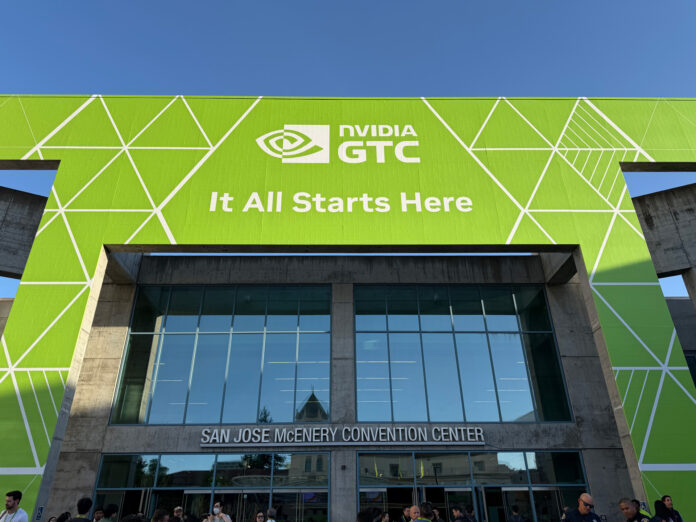
For years, the promise of AI agents has lived comfortably in demos and research papers. At GTC 2026, NVIDIA made a different kind of announcement, not about what agents could do, but about the infrastructure required to make them actually work at scale.
This shift matters. And it's worth unpacking carefully.
From Chatbots to Agents: Why the Compute Requirements Are Fundamentally Different
The classic AI interaction is simple: you send a prompt, the model sends a response. One call. One answer. The compute demand is predictable.
Agentic AI breaks that model entirely.
When an agent is given a goal rather than a question, it doesn't just respond, it plans, spawns sub-agents, delegates tasks, monitors outputs, and loops back when something fails. A single user request can trigger dozens of model calls happening in parallel, each requiring inference, each producing context that feeds the next step.
This is why the biggest theme at GTC 2026 wasn't a new GPU. It was the recognition that the entire inference stack needs to be rethought for a world where agents orchestrate other agents continuously.
NVIDIA's answer came in three pieces.
Piece 1, Vera Rubin Collapses the Cost of Inference
Before agents can be deployed at scale, inference has to get cheap enough that running thousands of model calls per user request doesn't bankrupt your product margins.
The Vera Rubin GPU architecture directly targets this. It delivers 50 petaflops of NVFP4 inference per GPU, a 5x jump over Blackwell, while the NVL72 rack configuration achieves 10x higher inference throughput per watt at one-tenth the cost per token compared to the previous generation.
That last number deserves to sit alone for a moment.
One-tenth the cost per token. That's not a performance improvement. That's an economic restructuring of what's viable to build. Use cases that were previously too expensive to run continuously, persistent agents, always-on monitoring, real-time orchestration across multiple models, suddenly have a real business case.
Vera Rubin ships to AWS, Azure, Google Cloud, Oracle, CoreWeave, and Lambda in H2 2026.
Piece 2, OpenShell Puts Guardrails on Agent Behavior
Raw compute is necessary but not sufficient. The reason most enterprises haven't deployed autonomous agents in production isn't capability, it's control. When an agent can take actions, send messages, query databases, and spawn other agents, the question of who is responsible for what it does becomes a real legal and operational problem.
NVIDIA's response is OpenShell, an open-source agent runtime that enforces policy-based security and privacy guardrails at the infrastructure level, not the application level.
This distinction matters. Building safety into each individual agent application is fragile and inconsistent. Building it into the runtime means every agent running on that substrate inherits the same constraints by default.
It's the same logic that made containerization powerful for software deployment, standardize the environment, and the behavior becomes predictable.
Piece 3, NemoClaw Makes Agent Development Accessible
The third piece is a developer story. OpenShell handles runtime safety, Vera Rubin handles compute economics, and NemoClaw handles the gap between "I want to build an agent" and "I have a production-ready system."
NemoClaw is a reference stack built on the widely adopted OpenClaw platform. Rather than forcing every team to architect their own agent pipeline from scratch, it provides a documented, tested starting point, with enterprise-grade reliability baked in.
Think of it as a scaffold. You don't have to use every piece, but having a sensible default structure accelerates the time from idea to deployment considerably.
Why This Combination Is Different
Each of these three announcements, Vera Rubin, OpenShell, NemoClaw, is interesting on its own. Together, they describe something more coherent.
NVIDIA is not just selling faster GPUs. It is assembling a vertical stack specifically designed for the agentic AI era: cheap inference at the hardware layer, safety enforcement at the runtime layer, and accelerated development at the application layer.
This is the same playbook that made CUDA so sticky a decade ago. Once developers build on a stack that works end-to-end, switching costs become prohibitive, not because of lock-in tactics, but because the integrated system simply works better than stitching together alternatives.
The bet NVIDIA is making is that the agentic transition is real, imminent, and large enough to justify building infrastructure for it now. Based on what was shown at GTC 2026, they're not hedging that bet.
What to Watch Next
The announcements were made. The hardware ships in H2 2026. Between now and then, a few things are worth tracking:
Inference cost benchmarks from independent labs. The 10x cost reduction claim from NVIDIA deserves third-party validation. When Vera Rubin units land with cloud providers, real-world numbers will tell a more complete story.
Enterprise adoption of OpenShell. The open-source release is promising, but adoption by major cloud providers and enterprise platforms will signal whether it becomes an actual standard or a niche tool.
Agent frameworks building on NemoClaw. If LangChain, CrewAI, AutoGen, or similar ecosystems integrate with NemoClaw natively, the developer story becomes substantially stronger.
The infrastructure is being laid. The question now is how fast developers build on top of it.