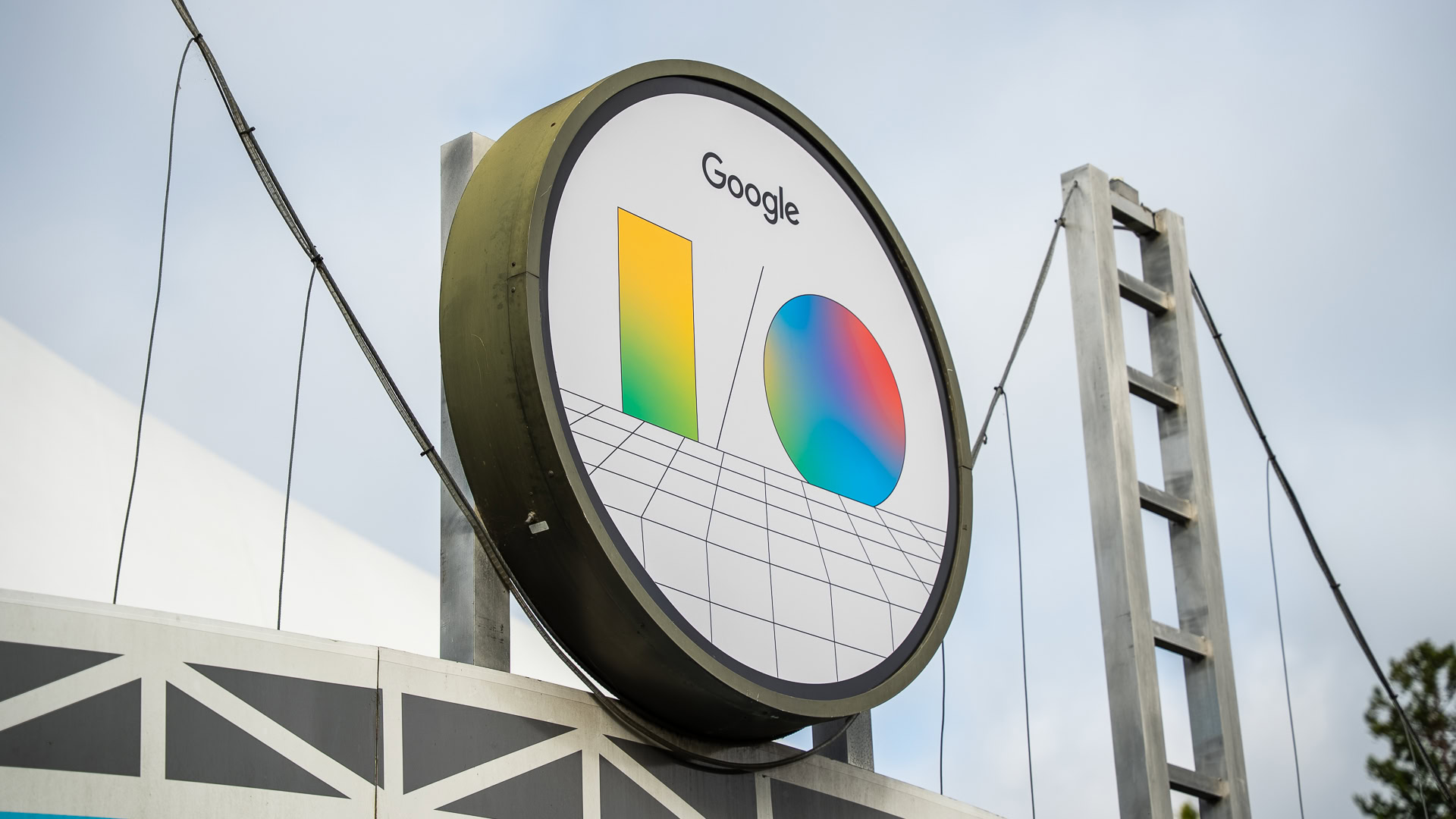
For years, Google I/O has been a developer keynote dressed up as a product launch. This year was different. Google I/O 2026 felt like a company that had been holding its breath finally exhaling, and what came out was a clear, unified bet on one thing: AI that does, not just AI that knows.
Sundar Pichai opened by noting it has been ten years since Google pivoted to being AI-first. That framing wasn't nostalgia. It was a signal: what you're seeing now is the payoff.
Here's everything that dropped, and why it matters.
Gemini 3.5 Flash: The New Daily Driver
The headliner on the model side was Gemini 3.5 Flash, and it earned the spotlight. Google claims it surpasses Gemini 3.1 Pro across nearly all benchmarks while keeping the speed and cost profile of the Flash series. Specifically, it outputs tokens at 4x the speed of other frontier models, and is optimized to run 12x faster inside Antigravity 2.0.
It's already rolling out across the Gemini app, Google Search, Antigravity 2.0, and the Gemini API starting today.
Gemini 3.5 Pro is in testing and expected to launch next month.
Also introduced: Gemini Omni, a new model series that combines reasoning with multimodal generation. It accepts image, audio, video, and text as input, and outputs video grounded in real-world physics and knowledge. It's now available in YouTube Shorts Remix and the Google Flow creative apps.
Gemini Spark: Your AI That Actually Does Things
This was arguably the most significant announcement of the day.
Gemini Spark is Google's answer to the "agent" question everyone in AI has been circling for two years. It's not a chatbot. It's not an assistant. Google describes it as a "24/7 personal agent", a dedicated virtual machine running on Gemini 3.5 that operates in the background and takes actions on your behalf.
Spark integrates natively with Gmail, Google Docs, Drive, Photos, Calendar, and Tasks. This summer, it expands to third-party tools via MCP. The demo showed it handling multiple parallel threads simultaneously, summarizing emails, drafting replies, reorganizing calendar blocks, all without a single manual prompt.
It launches next week for Google AI Ultra subscribers in the US. Speaking of which,
New pricing:
- Google AI Ultra (new tier): $100/month, for developers, creators, and power users
- Previous AI Ultra tier: drops from $250/month to $200/month
A new Daily Brief feature, rolling out to Pro and Ultra today, gives you a personalized morning digest pulled from your Gmail, Calendar, and Tasks, with suggested next steps.
The Biggest Search Upgrade in 30 Years
Google Search is getting its most significant redesign since 1998. The new search box supports text, images, and video as input. AI Mode now runs on Gemini 3.5, bringing deeper reasoning and multimodal understanding to every query.
SynthID, Google's AI content watermarking system, is expanding from the Gemini app into Search and Chrome. OpenAI, Kakao, and Eleven Labs are all adopting it too, signaling it may become an industry-wide standard for AI content transparency.
Antigravity 2.0: Coding That Builds Operating Systems
Antigravity 2.0 is Google's agentic coding platform, now rebuilt from the ground up with a fully agent-first architecture.
The I/O demo was jaw-dropping: Antigravity 2.0 was tasked with building a working operating system from scratch. It spun up 93 subagents, consumed 2.6 billion tokens, and produced a functional OS foundation in 12 hours, all for under $1,000 in API credits. The team then asked Gemini to patch a driver issue in order to play Doom inside the OS. It did.
Antigravity 2.0 is available globally starting today, for everyone.
Intelligent Eyewear: The Hardware Play
Google saved the glasses for the end of the keynote, and they landed well.
Two form factors were introduced under the "intelligent eyewear" banner: display glasses and audio glasses, both running Android XR and powered by Gemini. The hardware is built by Samsung and Qualcomm. The external design was handled by Gentle Monster and Warby Parker, a deliberate choice to make these wearables people actually want to own.
The live demo showed a wearer asking Gemini to navigate to a coffee shop visited the previous week. Gemini provided step-by-step audio directions, placed the usual coffee order in advance via DoorDash, and then, just for fun, used the glasses' camera and the Nano Banana feature to add a blimp and other generated objects to a photo of the crowd. All without touching a phone.
The glasses pair with both Android and iOS. Audio glasses arrive this fall. A third pair, Xreal's Project Aura display glasses, are also launching this year, built with a Qualcomm Snapdragon puck for compute.
More Things Worth Knowing
Ask YouTube, A conversational AI search tool for YouTube that handles complex queries and follow-up questions. It surfaces the most relevant videos with structured, interactive responses. Available now for Premium subscribers in the US at youtube.com/new.
Docs Live, Verbally brain-dump an idea and Google Docs generates the full document. Rolling out this summer to AI Pro and Ultra subscribers.
Google Pics, A standalone AI image generation and design app.
Gemini for Science, A research acceleration suite connecting Gemini's deep reasoning and agentic tools to over 30 major life science databases. Aimed at accelerating drug discovery, climate modeling, and related fields. Science Skills is available today on GitHub and in Antigravity.
TPU 8i, Google's 8th-generation TPU with 3x the raw compute of its predecessor. Combined with a new multi-site training architecture spanning over 1 million TPUs globally, Google now claims the largest AI training cluster in the world.
Gemini app redesign, A new design language called Neural Expressive brings fluid animations, haptic feedback, and restructured navigation. Gemini Live now runs inline rather than full-screen. The compute model is shifting from daily prompt limits to a "compute-used" model.
The Bigger Picture
Demis Hassabis closed the keynote with a sentence worth sitting with: "AGI is now on the horizon."
That's not marketing language from Google. That's the head of Google DeepMind, speaking on stage, at the company's biggest annual event.
I/O 2026 wasn't about features. It was about a company signaling, clearly, loudly, across every product surface, that the role of AI is shifting from answering questions to doing work. From assistant to agent. From tool to partner.
The race isn't about who has the smartest model anymore. It's about who can make that model act the fastest, at the lowest cost, across the most surfaces.
Google just made a very strong argument that they intend to win that race.