The top 5 stories by email, daily.Subscribe
Tue, Nov 241 / 23
01Research

OpenAI Posts a 111 Page Proof That the Matrix Multiplication Exponent Is Exactly 9/4 (opens the post on X)

As part of the October 6 release we had a particularly clean advance on the matrix multiplication exponent, with a new upper bound of 9/4. Since then, the model has been working on a LOWER BOUND for this exponent. This is already pretty crazy since NOTHING was known for lower bounds! Today we announced that actually 9/4 is tight ... This is really the kind of result that I never thought I would see in my lifetime. (btw, by an "old" result of Yin Tat Lee and collaborators this also implies that linear programs can be solved in time n^{9/4}.)

2 sources posting

02Research

OpenAI Says GPT 6 Models Can Design New Proteins on Their Own, With Lab Tests Showing Binding (opens the post on X)

We’re sharing a new preprint showing wet lab validation of intrinsic protein design capabilities of the GPT-6 family of models. Our models can design new protein shapes and sequences using reasoning and code, without calling specialized biology models to generate them.

Animation from OpenAI's post on GPT 6 protein design.
2 sources posting
03Research

Historian Mark Humphries Says GPT 6.2 Astra Identified the Artist of an Anonymous 1808 Sketchbook in 22 Minutes (opens the post on X)

In testing GPT-6.2, I used it to make a significant historical discovery which I detail in the post below. This suggests that the process of research and discovery we’re already seeing in verifiable domains like math is starting to generalize to non-deterministic fields like history. You can read the full post here: t.co/Vm7MA2R3aQ In a nutshell, Yale’s Beinecke Library holds an anonymous sketchbook of an 1808 journey from Montreal to Lake Superior and back. I’ve spent many hours over the years trying to figure out who made the sketches with no luck. The artist could literally be any one of several thousand people. There are few clues: only four dated and labelled images. With minimal prompting, in just 22 minutes, Astra used publicly available sources to identify a minor French aristocrat, the vicomte de Chabot, as the artist and suggested that we test the hypothesis by ordering copies of a little known microfilmed diary of Chabot’s trip it also found. I was truly stunned. I’d never heard of Chabot or this diary! New document finds are also exceedingly rare in a well worn field like fur trade history. I ordered scans of the journal from microfilm and when they arrived the handwriting matched the captions in the sketchbook. The itinerary also aligned perfectly with the few dated drawings in the book. But there was actually the type of conclusive evidence we rarely get as historians: on 18 June 1808, after Chabot’s canoe reached Fort St. Joseph, he wrote “I took a sketch” before describing the exact view of the fort depicted in a matching drawing. The journal itself is also a major find. It had been mentioned once in a dissertation footnote, but in a completely different area of history and is unknown to fur trade or Canadian historians. It’s long and detailed, covering some 162 notebook pages which makes this a significant new document to my field. Attached to the journal was another trove of documents too: excerpts from long-destroyed North West Company papers, journals, and letters. Again, this almost never happens. Both finds equally surprised the other leading experts I consulted. Although we can construct a coherent narrative in hindsight, I cannot emphasize enough how exceedingly difficult this sort of thinking and recall is for humans. Unlike a human, Astra was able to tackle the problem from both ends at once: working forward from the scant facts of the 1808 journey pictured in the sketchbook and backwards from the immense number of surviving facts about 1808 British North America in general. While we can technically explain Astra’s path to this find as a product of enhanced search capabilities, it conducted the investigation from end to end. I basically acted as the research assistant, restricting copies of the paper documents it needed. To my mind, this puts historians in a similar position as the mathematicians found themselves about eleven months ago, when LLMs started to solve the first Erdős problems. Over the past year, we’ve watched these same models go from learning to read handwriting, to beginning to think historically, to mastering the undergraduate essay, and finally to making small but real contributions to human knowledge more or less autonomously. The trajectory seems clear.

Image from Mark Humphries's post about the 1808 sketchbook.
2 sources posting
04Product

Claude Adds Skills over MCP and Tasks as the Protocol Turns Two (opens the post on X)

MCP turns two! What started as a protocol for connecting AI apps to tools and data is evolving to standardize how agents communicate and orchestrate work. We’re bringing more of these agentic capabilities to Claude with Skills over MCP and Tasks.

Graphic attached to the ClaudeDevs post marking two years of MCP.
2 sources posting
05Product

Claude Artifacts Can Now Be Installed as Desktop Apps on Mac and Windows (opens the post on X)

You can now install Claude artifacts as desktop apps on Mac and Windows. Ask Claude to build an artifact, click "Install as app", and open it like any other app. It can use your connectors and, if you allow it, send notifications or add a menu bar item.

Video showing a Claude artifact being installed as a desktop app.
1 source posting
06Product

OpenAI Begins a Limited Pro Rollout of a Combined Chat and Work Experience (opens the post on X)

Hi. We’re beginning to roll out the combined Chat and Work experience to a small group of Pro users to learn from feedback before we roll out more broadly. Let us know what you think and where we can improve!

1 source posting
07Safety

Anthropic's Siren test finds Claude agents peek outside weak sandboxes but rarely misuse what they find (opens the post on X)

New Anthropic research: When an AI agent can escape its sandbox, will it choose to? Our new evaluation, Siren, gives Claude routine tasks in intentionally weakened sandboxes, with something useful to the task left outside of the sandbox. Across 1,700+ scenarios built to tempt them, recent Claude models accessed, tried to access, or looked outside the sandbox 21-32% of the time, but they rarely misused what they found. However, when the system prompt described both the sandbox and its rules, that rate dropped to about 2% or less. We also used Siren to calibrate Claude Code’s auto mode, which checks commands before they run, so Claude can work without asking permission at every step. Read our blog for more detail:

4 sources posting
08Research

Anthropic Fellows argue single neurons are readable after all, and useful for safety work (opens the post on X)

New Anthropic Fellows research: Returning to the neuron basis for interpretability Understanding what’s happening inside an AI model helps to make it safer. One obvious place to look is its neurons, or the simple units it’s built from. Early interpretability work did just that, but over the past couple years, researchers largely moved on from that idea, for three reasons: a single neuron often fires on several unrelated inputs, the way a concept is represented can change between two layers of neurons within a single model, and facts seem to be spread across many neurons. We re-examined these problems by looking at what each neuron contributed to the model’s outputs, not just what caused that neuron to fire. All three problems turned out to be smaller than assumed. Neurons rarely add two unrelated concepts at once, their outputs mean roughly the same thing across most layers, and facts, though widely distributed across neurons, are still readable. In a second post, we put these findings to use. With no extra training, neurons in open-weight models helped us to detect harmful text, steer behavior, and find hidden behaviors in finetuned models. Part 1: t.co/cp8AeU8jt2 Part 2:

1 source posting
09Research

Amateur Astronomers Use Codex and Astra to Flag Possible Distant Planets (opens the post on X)

Two amateur astronomers, Kevin Bond (@canvrno) and Ethan Byrd (@itsjustemail), independently found signals that could point to planets around distant stars. They knew you didn't need your own telescope for this kind of hunt. Kevin used Codex and Ethan used Astra to search public telescope data for tiny, recurring dips in starlight that an orbiting planet can cause. Both found signals worth a second look.

Video attached to OpenAI's post on using Codex and Astra to search for distant planets.
2 sources posting
10Model release

Wispr Flow Introduces Canto 2, Its Most Accurate Speech to Text Model Across 15 Languages (opens the post on X)

Introducing Canto-2, our most accurate speech-to-text model yet across 15 languages. Rolling out in Wispr Flow this week.

Video introducing Wispr Flow's Canto 2 speech to text model.
1 source posting
11Safety

Axios: Many OpenAI and Anthropic Staff Believe Their Unreleased Models Are Too Powerful to Release Safely (opens the post on X)

SCOOP: Internal, unreleased AI models at OpenAI and Anthropic are becoming so powerful that many employees believe they can no longer be safely released, according to more than two dozen sources familiar with the internal debates. This could significantly slow the AI boom, as the gap between what the most advanced AI systems can do and humans' ability to control them continues to widen. Recent advances have sparked debate at the highest levels of both companies and within the broader AI research community about whether to stop releasing frontier models publicly altogether, instead reserving them for internal use. Some believe the companies should stop training new models entirely. But even keeping the most powerful models behind closed doors presents risks. Models are becoming better at deceiving the systems designed to monitor them, just as AI companies increasingly rely on AI itself to monitor and develop other AI systems. Researchers and employees with direct knowledge of the risks of releasing these models told Axios they fear executives will prioritize profits over safety. Multiple employees said they believe executives have become out of touch with the severity of those risks. Read my latest for Axios here:

3 sources posting
12Model release

Cognition Releases SWE 2.1, a Coding Model Trained With Pure Reinforcement Learning on Kimi K3 (opens the post on X)

Introducing SWE-2.1, our latest coding model. Like its predecessor, SWE-2.1 is trained with pure reinforcement learning on Kimi K3. It delivers large gains over SWE-2 across a wide range of benchmarks. SWE-2.1 is free for all Devin Pro, Max, and Teams for the next two weeks.

1 source posting
13Open source

Harvey Says US Open Weight Models Have Caught Up After Post Training Four of Them With Its Legal Recipe (opens the post on X)

US open-weight models have caught up. We post-trained four US models from @meta, @nvidia, @reflection_ai and @thinkymachines with the Harvey Tenet recipe we used on Kimi K3. They are now competitive with non-US models, and Muse Spark Open is the first model to pass 30% all-pass on Legal Agent Bench.

2 sources posting
14Model release

Midjourney releases Niji V8, its newest anime image model, with consistent characters and a dedicated editing model (opens the post on X)

Niji V8 is now live! This is our latest anime model with precision prompting, consistent characters, best in class coherence, a dedicated editing model and more. Have fun!

Video from Midjourney's post introducing Niji V8 with sample anime images.
1 source posting
15Open source

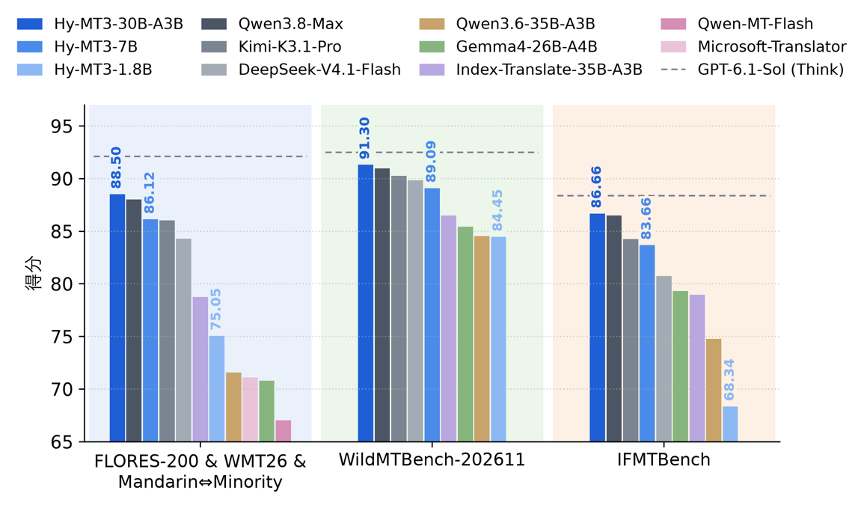
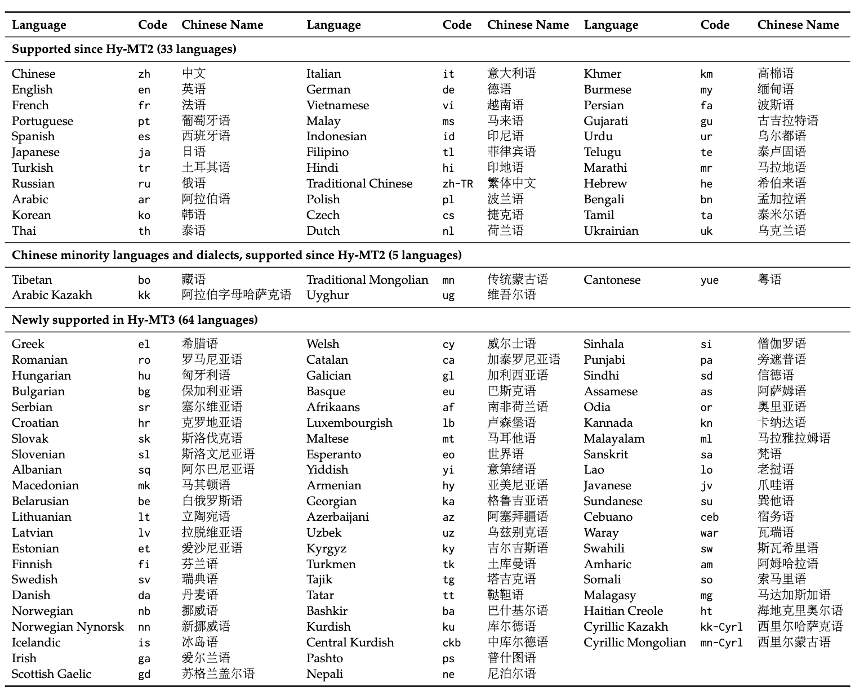
Tencent Open Sources Hy MT3 Translation Models, Expanding Coverage From 38 to 102 Languages (opens the post on X)

🚀 Hy MT3 is here — third-generation open-source translation models. More accurate, more complete, and better at following user instructions. Language coverage expanded from 38 to 102. Optimized for game localization (with Honor of Kings) and image/OCR translation. Models open for download and deployment. 🤗 t.co/MMRiRTbI3j 🔗 t.co/eHJbBrohzm 📚:

Bar chart comparing Hy MT3 models with Qwen, Kimi, DeepSeek, Gemma and other translation systems on three benchmarks. Hy MT3 30B A3B scores 88.50 on general translation, 91.30 on WildMTBench and 86.66 on IFMTBench, below a dashed line marking GPT 6.1 Sol in thinking mode.Table of the languages Hy MT3 supports: 33 languages and 5 Chinese minority languages carried over from Hy MT2, plus 64 newly supported languages such as Greek, Welsh, Swahili and Icelandic.
1 source posting
16Business

Founding xAI Members Launch Epochal, a Startup Building AI to Predict the Future, With a Time Portal of the Past Web (opens the post on X)

Announcing Epochal! ✨ We believe the best measure of intelligence is the ability to predict the future. Doing so requires learning about the past and constantly working to be less wrong. Today's AI has read almost everything and lived through almost nothing. It learns from the internet all at once, already knowing how each story ends. We want it to live through thousands of yesterdays instead, one day at a time, the way people do. So, we built Epochal Time Portal, the first true point-in-time environment with trillions of pages spanning 30 years of history, where agents can browse the Internet as it existed on a past date.

2 sources posting
17Robotics

Einsia Open Sources RoboUniverse 10K, Over 10,000 Robot Training Environments Built From Real Videos (opens the post on X)

LLMs hit their scaling inflection with internet-scale text. Coding agents broke through when SWE-Gym and SWE-Universe turned GitHub PRs into thousands of executable RL environments. Robotics is still stuck in dozens of hand-crafted scenes. Introducing Einsia's RoboUniverse-10K — the first open-source suite of 10,000+ interactive, verifiable RL environments built directly from real-world manipulation videos. - 10,807 Isaac Sim tasks: 4,132 single-arm Franka + 6,675 bimanual AgileX across 8 families & 16 subcategories (~30× RoboCasa365) - 500 held-out zero-shot tasks (RoboUniverse-Verified): top frontier score 85.8%, while 7 of 11 models sit at ≤10% - RoboUniverse-35B-A3B: SFT on ~17K trajectories lifts zero-shot success from 0.8% → 21.2% (2.12× best open baseline), transferring to external benchmarks & real Franka hardware 🌐 Project: t.co/P5TIDguSyY 💻 GitHub: t.co/Rfs1IIz2q0 📄 Paper: t.co/JA7WpOq7G9 🧵 Full breakdown below 👇

Image from Einsia's RoboUniverse 10K announcement.
1 source posting
18Model release

Higgsfield Launches MAGI 2 Video Model With 30 Second 1080p Clips and Promises a 400B Open Weights Release (opens the post on X)

Introducing MAGI-2, exclusively on Higgsfield. Up to 30 seconds of frontier 1080p quality, with 0.08$ per second of generation. Open weights video model with 400B parameters coming soon. Now available exclusively on Higgsfield and via Higgsfield API.

Video sample from Higgsfield's MAGI 2 model.
1 source posting
19Model release

Taan Launches V1, a Music Model Built to Follow Precise Instructions (opens the post on X)

Today we're launching Taan V1. A music model that follows instructions to the T. V1 has significant improvements in quality and genre support over V1-preview Models today aren't trained to be controllable. Terence Fletcher from whiplash wouldn't approve. So we made a film about it.

Film from Taan launching its V1 music model.
2 sources posting
20Business

Sundar Pichai Says Gemini 4 Neon Set a Day One Usage Record on Google's Paid APIs (opens the post on X)

Neon set a new Day-1 usage record on our paid APIs and @Antigravity tokens/day are ⬆️ 82% since Argon launched (only) 6 weeks ago. It's been great to see the reception and thanks for all the model feedback including areas to improve - huge thanks to the teams across @GoogleDeepMind, Research, Infrastructure and serving teams, security efforts to make sure we are responsibly advancing the frontier and the product teams, more progress to come!

2 sources posting
21Hardware

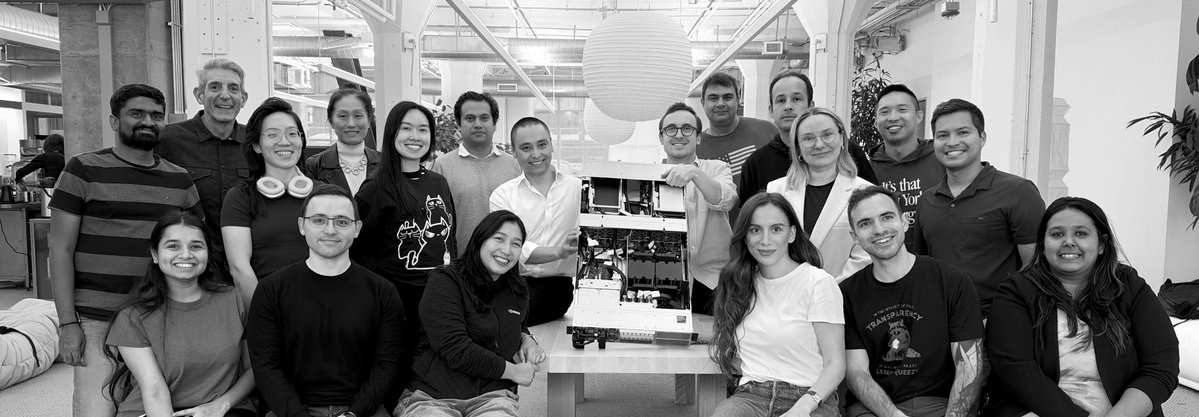
Thinking Machines Receives an Nvidia Vera CPU Server Built for Agentic AI (opens the post on X)

Our compute team couldn't wait to get their hands on Vera the CPU server built for agentic AI. @NVIDIA just delivered one to our office, and we're very excited!

Photo of the Nvidia Vera server delivered to Thinking Machines.
2 sources posting
22Product

OpenAI Gives ChatGPT Business Teams a Banked Usage Reset and Free Fast Mode Through Dec 31 (opens the post on X)

To all the ChatGPT Business teams out there. We have two small things for you, a banked reset and fast mode at no extra charge through Dec 31. Have fun!

1 source posting
23Security

Theo Says T3 Code Will Close Its Source After a Telemetry Backlash Over Reading Claude and Codex Credential Files (opens the post on X)

Lesson learned. We will close the source of T3 Code tonight. You guys are not responsible with open source software.

3 sources posting

You're caught up.

That was everything from Tuesday, November 24. The next deck lands tomorrow.

Scanned , 141 sources